
Japan Visa for Indians : Complete Guide to Visa Application & Process

Indian citizens need a tourist visa to visit Japan. The visa costs ₹4,210 (government fee ₹1,850 + Fly For Holidays service fee ₹2,360), and processing takes 7 working days after submission to the Japanese consulate. This guide explains everything families and first-time international travelers need to know.

Japan Visa fees for Indians in 2026

The visa fees for Japan has revised effective April 2024, the charges of the Embassy Including VFS is INR 1850/- Including all charges.

Japan Tourist Visa

Visa Validity90 Days
Stay Period15 to 30 Days
Processing Time7-8 Working Days
EntrySingle or Multiple
Service ChargeINR 2,360/-
Total Visa FeesINR 4,210/-

Japan Business Visa

Visa Validity90 Days
Stay Period15  to 30 Days
Processing Time7-8 Working Days
EntrySingle or Multiple
Service ChargeINR 2,360/-
Total Visa FeesINR 4,210/-

What’s Included in Fly For Holidays’ Service?


Our service fee includes document review against official requirements, guidance on application form completion, tracking of your application status. There are no hidden charges. If you require courier delivery outside our Mumbai office, we’ll inform you of courier costs upfront (typically ₹250–500 depending on location).

Let Our Japanese Visa Expert Call you Back


    Do Indians Need a Visa for Japan?

    Yes, Indian citizens cannot visit Japan without a visa. Unlike some countries that allow visa-on-arrival, Japan requires you to obtain approval before traveling, regardless of how long you plan to stay or whether you’re visiting for the first time.


    The good news is that the process is straightforward if you understand what’s needed. Thousands of Indian families successfully obtain Japan visas every year, and with proper preparation, you can avoid common delays.


    Most Indian citizens holding a valid Indian passport can apply for a Japan tourist visa. However, your eligibility can be affected by individual circumstances. The Japanese consulate looks for evidence that you are a genuine tourist, that you have sufficient financial means to support yourself during your stay, and that you intend to return to India after your visit.


    If you have concerns about your specific situation—such as a complex passport history or previous visa rejections—it’s worth discussing this with Fly For Holidays before applying. Our visa experts have processed thousands of applications and can advise whether your situation requires special attention

    The Japan tourist visa is designed for leisure travel, sightseeing, visiting family, and holiday purposes. It’s the visa type that the vast majority of Indian travelers apply for.


    This visa typically allows you to stay in Japan for up to 90 days per visit. The visa itself is usually valid for either six months or one year from the date of issue, meaning you must enter Japan within that validity period. However, actual visa validity can vary—the consulate determines the specific validity period based on your application.


    If you plan to visit Japan multiple times within the next year or two, you can request a multiple-entry visa. This allows you to enter and exit Japan several times without needing a new visa for each trip. 

    DocumentsRequirements
    Passport Valid for at least 6 months beyond your intended return date from Japan. Must be in good condition with no damage or water stains.
    PhotographsTwo recent color photographs (4cm × 3cm). White background, taken within the last 3 months. Face must be clearly visible.
    Application FormOfficial Japanese consulate form (typically form V-304), completed in English or Japanese, signed in black or blue ink.
    Travel ItineraryOutline of cities you’ll visit and approximate dates. Detailed day-by-day planning is not necessary.
    Proof of AccommodationConfirmed hotel booking, letter from family providing accommodation, or booking confirmation covering your entire stay.
    Return Flight TicketConfirmed round-trip flight reservation showing entry and exit dates from Japan.
    Bank Statements & ITR6 months of statements(Attested by the Bank) showing account activity and sufficient balance to support your stay. 3 Years of ITR
    Proof of EmploymentLast 3 Months Salary Slips & Leave Letter From Company
    Cover LetterOne-page letter addressed to the Japanese consulate explaining your purpose, cities you’ll visit, dates, and why you’re visiting Japan.

    After we submit your complete application to the Japanese consulate, your visa is typically approved within 7 working days.

    Understanding the complete timeline helps you plan your travel appropriately:

    Stage 1: Document Gathering
    You collect documents (typically takes 3–7 days depending on how quickly your employer and bank respond).

    Stage 2: We Review Your Documents
    Once you submit to Fly For Holidays, our visa expert reviews everything within 1–2 working days. If anything is incomplete, we immediately tell you what’s needed so you can provide it.

    Stage 3: We Submit to the Consulate
    After our review is complete, we submit your application the next business day.

    Stage 4: Consulate Processing
    The Japanese consulate processes your application in approximately 7 working days.

    Stage 5: Approval and Delivery
    Once approved, we notify you immediately and arrange delivery (collection from our office or courier to your address).

    Total Timeline: From submission to Fly For Holidays until you receive your approved visa typically takes 10–14 days, assuming your documents are complete.

     
    What Can Extend Processing?

    In most cases, applications are processed within 7 days. However, if the consulate requests additional documents or conducts background checks (rare but possible), processing extends. Peak seasons (December–January, summer holidays, March) may see longer timelines. Public holidays in Japan or India can also affect schedules.

    Families have specific concerns when applying for Japan visas together. Here’s comprehensive guidance.

    Do Children Need Separate Visas?

    Yes, each child must have their own visa. Children cannot be included in a parent’s visa. However, you can submit all family members’ documents together in one application package, and we coordinate with the consulate so family applications are processed together and approved around the same time.

     
    What Documents Do Children Need?

    Each child needs:

    • Their own valid passport
    • Two passport photographs (same specifications as adults)
    • Their own completed application form
    • Their own covering letter

    For the financial proof section, children use the family’s bank statements—you don’t need separate statements for each child. Children also need proof of support (an employment letter from a parent confirming they’ll support the child financially during the trip).

    A birth certificate or school enrollment letter showing the child’s name and date of birth is helpful additional documentation.

     
    Coordinating a Family Application

    You submit all family members’ documents together in one package. The consulate processes everyone’s applications together as a single case. Write one family cover letter explaining that your family is taking a holiday to Japan, mentioning family members included, and describing your planned activities.

    Coordinating a family application can feel complex—gathering four separate document sets, getting employment letters for each working adult, and ensuring all documents are consistent. Fly For Holidays streamlines this by bundling your family’s documents, guiding each family member through their specific requirements, and ensuring everyone’s paperwork meets consulate standards before submission.


    Cost for Families

    Each family member pays the full cost: ₹4,210 per person. A family of four pays ₹16,840 total. There are no additional administrative fees for processing multiple family members together.

    Processing Time for Families

    Family applications follow the same 7-working-day timeline. There’s no additional processing time because the consulate processes family applications as one package.


    Common Mistakes to Avoid

    Understanding what mistakes cause delays or rejections helps you prevent them:

    Passport Issues: Using an expired or nearly expired passport is a common mistake. Your passport must be valid for at least 6 months beyond your intended return date. If your passport expires soon, renew it before applying for a visa.

    Photograph Specifications: Photos that don’t meet size requirements, have colored backgrounds, or are outdated (older than 3 months) cause rejection or delays. Use recent, professional-quality photographs with white backgrounds.

    Incomplete Documents: Missing even one required document delays your application by weeks or causes rejection. This is the most common problem we see with DIY applications. Using our document verification service eliminates this risk.

    Inconsistent Information: Information that differs between your passport, bank statements, employment letter, and application form raises red flags. Ensure all documents are consistent and accurate.

    Unclear Cover Letter: A vague cover letter leaves the consulate wondering about your purpose for visiting. Write clearly and specifically about which cities you’ll visit, approximate dates, and why Japan interests you.

    Financial Proof Issues: Bank statements that show insufficient balance or unusual activity (large withdrawals or deposits right before applying) can raise concerns about financial stability. Provide several months of statements showing consistent, healthy balances.

    Incorrect Form Completion: The application form must be completed correctly, signed in the right places, and without crossed-out sections that aren’t initialed. Small errors multiply if not handled properly.

    Fly For Holidays prevents all of these mistakes through upfront document verification and guidance.

    Page Title

    Why Choose Fly For Holidays?

    Real Time Support​

    Get Real time support for all your queries. We are available 24*7 during tour​

    Up to Date

    We keep ourself up to date with latest updated and policies laid by the Visa Offices

    Big Savings​

    Our service fees are the most competitive in the market

    Satisfaction is Guaranteed​

    Keeping in mind about your budget, we guarantee 100% Satisfaction​

    Page Title

    Love From Clients

    Feedback Summary Feedback Summary

    DIY Application vs. Professional Assistance: Which Is Right for You?


    Many first-time travelers ask: “Can I apply myself, or should I use Fly For Holidays?”


    Applying Yourself (DIY)

    Advantages: You save the ₹2,360 Fly For Holidays service fee.


    Disadvantages: You’re responsible for understanding all consulate requirements, correctly filling out the form, ensuring documents are properly formatted, communicating with the consulate if they need clarification, and tracking your application status. If something is incorrect or missing, you discover it after submission, which delays your visa by weeks.


    Most common DIY mistakes we see: Missing documents, photos that don’t meet specifications, incomplete bank statements, inconsistent information between documents, and application forms filled out incorrectly. Any of these can lead to rejection or delays.

     
    Using Fly For Holidays


    Advantages: We verify everything before submission (preventing rejections and delays), we guide you on completing the form correctly, we handle all consulate communication, we track your application daily, and we guarantee professional handling of your case.

    Cost: ₹2,360 per person.


    Reality Check: Most DIY applicants submit incomplete documents and face delays. The ₹2,360 service fee is small compared to the cost of a visa rejection (having to reapply, rescheduling your trip, or missing important travel dates).

     
    Our Recommendation

    If you’re a first-time international traveler, anxious about getting rejected, or have a complex visa situation, professional assistance is worth the investment. If you’re experienced with international travel and confident in your document preparation skills, DIY is an option.


    Either way, contact us to discuss your specific situation. A brief conversation can clarify whether professional assistance makes sense for you.
    Let Our Japanese Visa Expert Call you Back

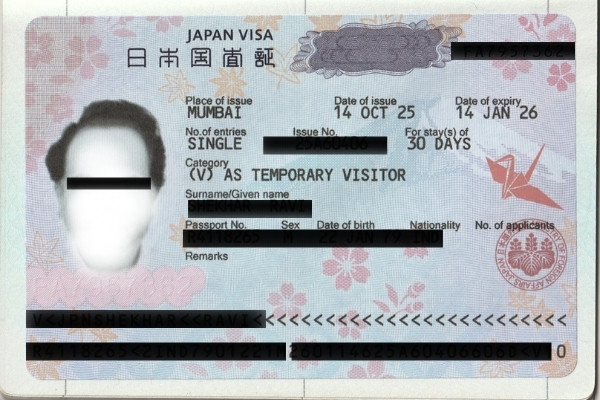
      Japan Visa Sample
      Japan Visa For Indians Fly-For-Holidays

        Request A Call


        FAQ by Topic - Expand by Heading

        Frequently Asked Questions

        What is a Japan Visa?−
        What exactly is a Japan visa?
        A Japan visa is an official authorization allowing entry into Japan. It is issued by Japanese embassies or consulates abroad. It indicates your purpose of visit, length of stay, and number of entries. However, final entry permission is granted at the Japanese border.

        Why do travellers need a Japan visa?
        A visa helps Japan control and monitor foreign entry into the country. It ensures visitors meet legal, financial, and purpose-based criteria. It also protects national security and prevents overstays or misuse. Without it, most nationals cannot legally enter Japan.

        Is a visa the same as a residence permit?
        No, a visa only grants permission to enter Japan. Your legal status inside Japan is defined by your "status of residence." The immigration officer gives this status upon arrival. So the visa is for entry, not for long-term residence.

        Can a Japan visa guarantee entry into the country?
        Not automatically a visa allows you to travel to a Japanese port. At immigration, an officer still needs to approve your entry. They check your documents, purpose, and compliance at the border. Only after this are you allowed to enter Japan.

        What is the difference between single and multiple-entry visas?
        A single-entry visa lets you enter Japan only once. Once you leave Japan, it becomes invalid even if unused days remain. A multiple-entry visa allows multiple visits within its validity. It's ideal for frequent short-term visitors.

        Is a Japan visa required for all foreigners?
        No, not all foreigners need a visa to visit Japan. Citizens of certain countries enjoy visa-free entry for short stays. Visa exemption depends on nationality and travel purpose. Always check updated visa policies before booking.

        Does Japan offer electronic or e-visas?
        Yes, Japan now offers e-visas for certain short-term stays. They're available for tourism and some nationalities only. The application is done online, with no embassy visit needed. Once approved, the visa is linked electronically to your passport.

        Can I travel anywhere in Japan with a visa?
        Yes, Japan visas allow travel throughout the entire country. There are no regional restrictions once you’ve entered. However, your activities must match the visa purpose (e.g., tourism). Violating visa terms may lead to penalties or deportation.

        What happens if I leave Japan before my visa expires?
        That’s completely fine you don’t have to use the full duration. You can leave Japan anytime during your allowed stay. Unused days do not “carry over” to a future trip. A new visa or re-entry permission is needed to return.

        Can I change my purpose of stay once I enter Japan?
        In most cases, no, especially on short-term visas. Tourist visas, for example, cannot be changed to work or study. You’d need to leave Japan and apply for a new visa. Changes in visa status require proper approval from immigration.

        Do Indians need a visa to enter Japan?
        • Yes. Indian nationals holding ordinary passports must obtain a visa (or eVisa where applicable) before travelling to Japan. Embassy of Japan in India
        • From 1 April 2024, Japan introduced an eVISA system for India for short term visitor visas. Embassy of Japan in India

        Who needs a visa for Japan?
        • Ordinary Indian passport holders travelling to Japan for “short term stay” (tourism, visiting relatives, leisure) require a visa in advance; the eVISA system applies to them.
        • Those doing long term stay (work, research, studying etc., generally over 90 days) require a “Certificate of Eligibility” in addition to the visa application.
        • Diplomatic and Official passport holders have separate application procedures.

        How long is a Japan visa valid? (for Indians)
        • Applicants may submit their visa application up to 3 months (90 days) in advance of their intended travel date. The visa must be used (i.e. entry into Japan) before the visa validity period expires.
        • The duration of stay in Japan under a short term visitor visa is generally up to 90 days.
        • For multiple entry short term visas, validities may be longer (for instance, some multiple entry visas are issued for up to 5 years), depending on eligibility (travel history, purpose etc.).
        Who Needs a Visa to Enter Japan? +
        Do all nationalities need a visa to visit Japan?
        No, citizens of certain countries are visa-exempt for short stays. These are mainly for tourism, transit, or short business trips. The exemption length is usually 15 to 90 days. Always check the latest list from Japan’s Ministry of Foreign Affairs.

        What determines if I need a visa to enter Japan?
        Your need for a visa depends on two main things: Your nationality and the purpose of your visit. Even visa-free nationals need a visa if visiting long-term. Always match your visa with your travel purpose.

        Are visa rules the same for all passport types?
        No, holders of diplomatic or official passports may have exemptions. Regular passport holders follow general visa regulations. Check with your embassy for special agreements or exceptions. Each passport type is treated under its own category.

        Can I transit through Japan without a visa?
        Yes, if you stay in the international transit area at the airport. But if you leave the airport or switch terminals, a visa may be needed. Some nationalities cannot transit without a visa at all. Confirm rules based on your passport and itinerary.

        Do children need separate visas to enter Japan?
        Yes, minors need their own visas unless visa-exempt by nationality. Applications for children include parental consent and documentation. They must meet the same entry rules as adults. Accompanying a parent doesn't waive the visa requirement.

        Can I enter Japan on a different passport if I hold two?
        Yes, but you must use the same passport throughout your trip. Choose the one that benefits you most, e.g., visa-free access. Switching passports mid-trip can lead to complications. Declare the correct one during visa application and at immigration.

        What if I’m a permanent resident of another country?
        Your visa requirement depends on your citizenship, not your residen Even if you live abroad, your passport’s nationality determines the rule. However, applying from a third country may require extra proof. Show legal status in your country of residence when applying.

        Do cruise ship passengers need a visa for Japan?
        Not always. Some cruise passengers can enter Japan visa-free. It depends on your nationality and whether the cruise is pre-approved. You must stay within allowed areas and return to the ship. Confirm with your cruise operator or the Japanese consulate.

        Can refugees or stateless individuals apply for a Japan visa?
        Yes, but the process is more complex and varies by case. Applicants must submit travel documents and supporting details. Approval is not guaranteed and may take longer. Contact your nearest Japanese embassy for specific procedures.

        Can my visa-free entry be denied at the airport?
        Yes, entry can be denied even if you’re visa-exempt. If immigration finds suspicious plans or inadequate funds, they can refuse. Visa exemption doesn’t guarantee automatic entry. Always carry proof of your purpose, funds, and return plans.
        How to Apply for a Japan Visa +
        What’s the general process to apply for a Japan visa?
        Check if you need a visa and determine the type. Collect required documents like passport, photo, and travel plans. Submit the application to your local Japanese embassy or online. Wait for processing, then receive your visa if approved.

        Can I apply online for a Japan visa?
        Yes, Japan has introduced an eVisa system for select nationalities. It’s available mainly for short-term tourist visas. Applications are done through an official online portal. If eligible, there’s no need to visit the embassy in person.

        Do I need confirmed flight and hotel bookings?
        Tentative bookings are usually sufficient for visa application. They want to see a clear plan, not necessarily paid reservations. Avoid making non-refundable bookings before visa approval. Travel insurance is also recommended but not always required.

        Can a travel agency help me apply for a visa?
        Yes, authorized travel agents can assist with Japan visa processing. They help with paperwork, appointment booking, and submission. Some embassies even require applications through agencies. Always check if your agent is accredited.

        How many days before my trip should I apply?
        Apply at least 3 to 4 weeks before your departure date. Processing usually takes 5–10 business days but may vary. Earlier applications allow time for document fixes or interviews. Avoid last-minute applications to reduce travel risks.

        Is an interview required for all Japan visa applicants?
        Not always interviews are requested in certain cases only. If your purpose is unclear or documents are weak, they may call you. Some nationalities have mandatory interviews. Be prepared to explain your itinerary and return plans.

        Do I need a guarantor or sponsor in Japan?
        Not for tourist visas, unless invited by someone in Japan. If you’re staying with family or friends, they may need to sponsor. For long-term visas (work, study), a sponsor is usually required. They must provide identification and support documents.

        What kind of photo do I need for the visa?
        One or two recent passport-sized photos with a plain background. They should be taken within 6 months and meet Japan’s sizing rules. No hats, shadows, or glasses unless medically necessary. Check embassy guidelines to avoid rejection.

        Can I apply from a country where I am not a citizen?
        Yes, if you legally reside there (with a visa or residence permit). You must prove your legal status in the country of application. Some embassies may ask for extra documents in this case. Tourists in third countries cannot usually apply.

        What happens after I submit my application?
        The embassy or consulate will review your documents. They may request more info, call you for an interview, or approve it. Once approved, you’ll get your passport back with the visa. If rejected, no refund is provided and no appeal is allowed.

        How do I get a visa for Japan?
        To get a Japan visa, first identify the correct visa type (tourist, work, etc.). Prepare required documents like passport, visa form, photo, and itinerary. Submit your application to a Japanese embassy or consulate near you. Wait for processing, and collect your passport with the visa once approved.

        How to get a Japan visa for Indians?
        Indian citizens must apply through an authorized travel agency or VFS center. Submit your passport, filled visa form, photo, and travel documents. Tourist visas require confirmed bookings and financial proof. Processing usually takes 4–7 working days if documents are complete.

        How much does a Japan visa cost?
        A single-entry Japan visa generally costs around ₹550–₹600 in India. Multiple-entry visas may cost more, depending on the purpose and type. Additional service or agency fees may apply during submission. Fees are non-refundable even if the visa is denied.

        Can Indians apply for a Japan eVisa?
        Yes, as of 2023, Indians can apply for a Japan eVisa for tourism purposes. The application is done online through Japan's official eVisa portal. You’ll need to upload your documents and receive approval electronically. The visa is linked to your passport, with no physical sticker.
        Japan Visa Requirements+
        What documents are required for a Japan visa?
        You typically need a valid passport, visa application form, and a photo. Also include a travel itinerary, proof of funds, and flight/hotel info. Additional documents depend on your visa type. Always follow the checklist from your local Japanese embassy.

        Do I need a bank statement for my Japan visa?
        Yes, proof of financial capacity is usually required. Submit recent bank statements showing enough balance for your trip. It helps prove you can support yourself in Japan. Some applicants may also submit employment or income proof.

        Is travel insurance mandatory for a Japan visa?
        It’s not mandatory for most visa types but strongly recommended. Travel insurance covers medical emergencies, accidents, and cancellations. Some embassies might request it for long-term stays. It’s a wise safety net when visiting Japan.

        Do I need an invitation letter to apply for a Japan visa?
        Only if you're visiting friends, family, or a business contact. The host must send an official invitation with personal documents. Tourist visa applicants don’t need an invitation if traveling independently. The letter must follow embassy format and guidelines.

        What kind of photo is accepted for a Japan visa?
        A 45mm x 45mm photo with a plain white background. It should be recent (within 6 months), clear, and in color. Avoid shadows, hats, and glasses unless medically necessary. Photos that don’t meet standards may delay your application.

        Are hotel and flight reservations required for visa application?
        Yes, they show your travel plans and intended duration of stay. Tentative bookings are acceptable; no need for full payment. It helps visa officers confirm your itinerary is realistic. Always provide complete addresses and dates.

        What if I don’t have all the required documents?
        Missing documents can lead to visa rejection or delay. Always consult the embassy for acceptable alternatives or waivers. Incomplete applications are rarely accepted without strong reasons. Better to postpone than risk rejection.

        Can I submit photocopies instead of original documents?
        Some documents must be original, others can be copies. Check embassy rules passports, photos, and forms must be original. Supporting proof like bank statements can often be copies. Always clarify when in doubt.

        Do students or minors have different requirements?
        Yes, minors need parental consent and birth certificates. Students may need school letters or sponsor documents. Extra care is taken to ensure they’re not traveling alone unsafely. Embassies may ask for more proof of guardianship.

        Is a cover letter needed for a Japan visa?
        It’s not mandatory but highly recommended. A good cover letter explains your travel purpose, dates, and funding. It shows transparency and helps strengthen your application. Keep it short, clear, and polite.

        What are the visa requirements for Japan?
        You need a valid passport, filled visa application form, and recent photo. Also include a detailed travel itinerary, confirmed flight and hotel bookings. Financial proof like bank statements or ITR may be required. Additional documents depend on the visa type (tourist, business, etc.).

        How to get a Japan visa for Indians?
        Indians must apply through authorized agencies approved by the Japanese Embassy. Submit required documents like passport, bookings, photo, and financial proof. Tourist visa applicants may not need a sponsor if traveling independently. Processing takes around 5–7 working days after submission.

        How much ITR is required for a Japan visa?
        It’s ideal to submit ITR (Income Tax Return) for the last 2–3 years. There’s no fixed amount, but higher, consistent income shows stability. ITRs help prove your financial reliability and ties to India. Include Form 16 or salary slips for added support if possible.

        What is the minimum bank balance for a Japan tourist visa?
        No official minimum is stated, but ₹1.5 to ₹2 lakhs is generally safe. Your balance should cover flights, stay, food, and daily expenses in Japan. Higher balances improve your chances of approval. Include recent 3–6 months' statements to show consistent funds.
        Japan Visa Fees +
        How much does a Japan visa cost?
        Fees vary by visa type and nationality. As of now, a single-entry visa costs around ¥3,000. Multiple-entry visas are about ¥6,000, and transit visas around ¥700. Check your embassy’s official site for updated fees.

        Are Japan visa fees refundable if I get rejected?
        No, visa fees are non-refundable regardless of the outcome. Even if your application is rejected or withdrawn, the fee is kept. It covers processing, not results. Apply carefully to avoid losing money.

        Can I pay Japan visa fees online?
        Some embassies accept online payments for eVisa applications. Others require cash or bank payments during submission. Payment methods vary by country and embassy policy. Check specific instructions before applying.

        Do children have to pay visa fees?
        Yes, in most cases, minors pay the same visa fees as adults. However, some countries offer waivers or discounts for children. Fees also depend on the type of visa and agreement with Japan. Always verify with your consulate.

        Are visa fees the same for all countries?
        No, fees may vary based on bilateral agreements. Some countries have lower or waived fees under special treaties. Others pay standard rates for all applicants. Your nationality can affect the fee amount.

        When do I pay the Japan visa fee?
        You usually pay at the time of application or during passport collection. Payment timing depends on the embassy’s local process. Late or missed payments can delay or cancel your visa. Follow instructions closely.

        What if I need to reapply for the same visa?
        You’ll need to pay the full fee again when reapplying. Japan does not waive fees for reapplications, even if recent. Every submission is treated as a fresh case. Prepare better to avoid paying multiple times.

        Are group or family visa fees discounted?
        Japan doesn’t usually offer group discounts on visa fees. Each applicant pays the full amount individually. Some travel agencies may offer package deals separately. Always confirm exact costs before applying.

        Can a third party pay the visa fee on my behalf?
        Yes, in most cases, someone else can pay for you. But the payment must match embassy methods and requirements. The payer’s name usually doesn’t matter. Just ensure it’s paid correctly and on time.

        Are there any hidden or extra visa costs?
        Embassy fees are fixed, but agents may charge service fees. Courier, photocopying, and translation fees may apply separately. Always ask for a full breakdown of costs in advance. No official “rush fee” option exists.

        How much does a Japan visa cost?
        A standard single-entry Japan visa costs about ¥3,000 (approx ₹1,700). A multiple-entry visa is around ¥6,000 (approx ₹3,400). Transit visas are cheaper, usually about ¥700 (approx ₹400). Service fees may apply if applying through an agency or VFS center.

        How much is a 5-year visa fee?
        A 5-year multiple-entry visa to Japan typically costs ¥6,000. This equals around ₹3,400 depending on current exchange rates. It allows several short visits over 5 years but not a long stay. Agency service charges may be added separately.

        Does Japan give a 5-year visa?
        Yes, Japan offers a 5-year multiple-entry visa for eligible travellers. It’s usually for tourism or business with a short stay per visit (15–30 days). Applicants must show strong financial records and travel history. Approval is based on discretion of the consulate.

        Is Japan visa-free for Indians?
        No, Indian passport holders currently need a visa to visit Japan. Japan does not offer visa-free access to Indian citizens at this time. However, Indians can now apply online through the Japan eVisa system. Always check the latest guidelines before planning travel.
        Japan Visa Processing Time+
        How long does it take to process a Japan visa?
        Standard processing takes 5 to 10 working days. Some applications may take longer if extra documents are needed. Holidays or high seasons can also cause delays. Always apply well in advance of your travel date.

        Can I get a Japan visa urgently or faster?
        Japan does not officially offer an express or rush service. However, some embassies may process urgent cases by request. This is rare and only for strong, documented emergencies. Contact your embassy directly for possible exceptions.

        Does applying online make the process faster?
        eVisa applications are usually faster than paper ones. You skip embassy visits and submit documents digitally. Still, approval is not instant it may take a few days. Always check the eVisa page for updated timelines.

        When does the processing time start?
        It starts once the embassy accepts your complete application. Weekends and holidays are not counted in the timeline. Incomplete applications can delay the start. Make sure all documents are in order.

        Can delays happen even if my documents are correct?
        Yes, delays can occur due to background checks or high volume. Embassies may contact Japan’s Immigration Bureau for verification. Also, unexpected holidays can impact timelines. Always apply early to be safe.

        Will I be notified if there is a delay?
        Not always many embassies do not proactively give updates. You may need to contact them directly if waiting too long. Some may email or call you for clarification or missing info. Be reachable during the waiting period.

        Can I track the status of my visa application?
        Some embassies or visa centers offer tracking via reference number. Others do not provide live status updates at all. If unsure, contact the embassy after the estimated time passes. Keep your receipt and tracking number safe.

        Is the processing time the same for all visa types?
        No, short-term tourist visas are usually quicker to process. Long-term visas (work, study, spouse) may take weeks. They require background checks and coordination with Japan. Visa type heavily affects the timeline.

        What if I applied too late before my trip?
        You may not receive your visa in time and could miss your flight. Japan does not guarantee urgent issuance for late applicants. In such cases, you may need to reschedule your trip. Always apply at least 3–4 weeks before departure.

        Can my application be rejected due to slow processing?
        Not directly, but delays may cause you to miss deadlines or flights. If your plans change before a decision, you can cancel the request. However, visa decisions aren’t based solely on timing. Delays don’t mean denial unless rules are violated.

        How long does Japan visa approval take?
        Japan visa approval usually takes 5 to 10 working days. This depends on the visa type, your documents, and embassy workload. Delays can happen during holidays or peak travel seasons. It's best to apply at least 2–3 weeks before your travel date.

        How much time does a Japan visa take for Indians?
        For Indian applicants, processing typically takes 5 to 7 working days. Time may vary slightly depending on the city and agency handling it. Delays may occur if documents are incomplete or extra checks are needed. Always check with the authorized VFS center or travel agency in advance.

        How much does VFS Japan cost?
        VFS charges a service fee of around ₹650–₹850 per application. This is in addition to the Japan visa fee (approx ₹1,700–₹3,400). Prices can vary by location and services like courier or SMS tracking. You can pay by card, cash, or online, depending on the center.

        Can I get a Japan visa in 5 days?
        Yes, many applicants receive their Japan visa within 5 working days. This is common for tourist visas with complete and correct documents. However, faster processing is not guaranteed, especially during rush periods. Submit early to avoid travel delays or missed flights.
        Japan Visa Validity & Duration+
        What is the validity of a Japan visa?
        Visa validity is the time you have to enter Japan after it’s issued. For most short-term visas, it’s usually 3 months. If unused within that period, the visa expires. It doesn't mean you can stay in Japan for 3 months.

        What is the difference between visa validity and duration of stay?
        Validity is the deadline to enter Japan. Duration is how long you’re allowed to stay once inside. For example, you might have 90 days to stay, valid for 3 months. The two are different and both must be respected.

        How long can I stay in Japan on a tourist visa?
        Most tourist visas allow a stay of 15 to 90 days. The exact duration depends on your nationality and visa type. You must leave before your allowed stay expires. Overstaying can lead to fines or entry bans.

        What is a multiple-entry visa for Japan?
        It allows you to enter Japan multiple times within the visa’s validity. Stays are usually limited to 15 or 30 days per visit. Validity can range from 1 to 5 years. Great for frequent travellers who visit Japan often.

        Can I leave and re-enter Japan with a single-entry visa?
        No, single-entry visas are valid for one visit only. Once you leave Japan, the visa cannot be reused. If you plan to return, apply for a multiple-entry visa. Leaving voids the visa even if days remain.

        Does the visa validity start from the issue date or travel date?
        It starts from the date of issuance, not your travel date. You must enter Japan before the expiry of this period. Travel delays don’t extend the visa validity. Plan your trip within the active window.

        Can I extend my stay beyond the visa duration?
        Short-term stays usually can’t be extended in Japan. You must leave and reapply for a new visa later. Only in rare cases (like medical emergencies) is an extension granted. Always follow the original timeline.

        What happens if I overstay my visa?
        Overstaying is a serious offense in Japan. You may face fines, detention, or future entry bans. Even one-day overstays can lead to consequences. Always exit before your permission ends.

        Can the validity period be changed after visa issuance?
        No, once issued, the visa validity and duration are fixed. If plans change, you may need to apply for a new visa. Embassies don’t reissue or modify used or expired visas. Carefully plan before applying.

        What’s the longest a Japan visa can be valid for?
        Some multiple-entry visas are valid for up to 5 years. These are often granted to travellers with strong travel history. Stay duration per visit is still limited (usually 15–90 days). You must exit and re-enter for each new stay.

        How long does Japan visa approval take?
        Japan visa approval usually takes 5 to 10 working days. This depends on the visa type, your documents, and embassy workload. Delays can happen during holidays or peak travel seasons. It's best to apply at least 2–3 weeks before your travel date.

        How much time does a Japan visa take for Indians?
        For Indian applicants, processing typically takes 5 to 7 working days. Time may vary slightly depending on the city and agency handling it. Delays may occur if documents are incomplete or extra checks are needed. Always check with the authorized VFS center or travel agency in advance.

        How much does VFS Japan cost?
        VFS charges a service fee of around ₹650–₹850 per application. This is in addition to the Japan visa fee (approx ₹1,700–₹3,400). Prices can vary by location and services like courier or SMS tracking. You can pay by card, cash, or online, depending on the center.

        Can I get a Japan visa in 5 days?
        Yes, many applicants receive their Japan visa within 5 working days. This is common for tourist visas with complete and correct documents. However, faster processing is not guaranteed, especially during rush periods. Submit early to avoid travel delays or missed flights.
        Visa-Free Entry to Japan+
        Which countries have visa-free access to Japan?
        Japan allows short-term visa-free travel for over 60 countries. This includes the U.S., Canada, EU nations, Singapore, and more. The stay period varies from 15 to 90 days depending on nationality. Always verify with the embassy before you travel.

        How long can I stay in Japan without a visa?
        Visa-free durations are typically 15, 30, or 90 days. The length depends on your nationality and agreements with Japan. You must leave before this period ends. Extensions are rarely allowed for visa-free stays.

        Can I work in Japan on visa-free entry?
        No, you cannot work or earn money under visa-free status. Only tourism, family visits, or business meetings are allowed. Working without the proper visa is illegal. Violators may be fined or banned from re-entry.

        Do I need any documents for visa-free travel?
        Yes, you need a valid passport and a return/onward flight. Immigration may ask for proof of funds and accommodation. Travel insurance and a travel itinerary are also recommended. Being unprepared could lead to entry denial.

        Can I extend my visa-free stay in Japan?
        No, extensions are not allowed for visa-free entry. If you want to stay longer, you must apply for a visa. Leaving and re-entering may also raise red flags. Always respect the permitted duration.

        Can I visit Japan visa-free for business purposes?
        Yes, but only for short-term activities like meetings or conferences. No paid work or employment is allowed. You must still follow the entry conditions for your passport. Bring documents to explain your business purpose.

        What happens if I overstay a visa-free visit?
        Overstaying is taken very seriously in Japan. Even one extra day can lead to fines or deportation. You may also face bans on future entry. Always exit before your allowed stay ends.

        Can I enter Japan visa-free multiple times?
        Yes, you can re-enter as long as you follow the rules. However, frequent short stays may raise suspicion. Immigration may question your purpose or deny entry. Avoid abusing the visa-free system.

        Is visa-free entry allowed for cruise passengers?
        Yes, some cruise passengers are eligible for visa-free landings. It depends on nationality and cruise approval with immigration. You may be restricted to certain areas or time limits. Check with the cruise company in advance.

        Can I change my status after entering visa-free?
        No, visa-free travellers cannot change status inside Japan. If you want to study or work, apply for the proper visa first. Status changes require pre-approval and documentation. You’ll need to leave Japan and reapply.
        Japan Visa Extensions +
        Can I extend a tourist visa while in Japan?
        Generally, tourist visas and visa-free stays cannot be extended. Extensions are only granted under special circumstances like illness. You must apply at an immigration office before your stay ends. Approval is rare and not guaranteed.

        What reasons qualify for a visa extension?
        Accepted reasons include medical emergencies or unforeseen events. You'll need documents like hospital records or travel disruption proof. Financial or personal reasons are rarely accepted. Immigration examines each case strictly.

        How do I apply for a visa extension in Japan?
        Visit a regional immigration office with your passport and documents. Fill out the extension application and provide supporting evidence. Apply before your current stay expires. Decisions may take several days.

        Can I extend my visa if I get sick in Japan?
        Yes, if you provide medical records and a doctor’s recommendation. The extension is usually short and limited to recovery time. Immigration may check your condition before approval. You must apply before your visa expires.

        Is there a fee for extending a Japan visa?
        Yes, a fee is charged if your extension is approved. The standard fee is around ¥ 4,000 in revenue stamps. If denied, no payment is required. Always check with the immigration office first.

        Can I extend a working visa in Japan?
        Yes, working visas can often be extended from inside Japan. You’ll need employer support, tax records, and updated documents. Apply a few months before your visa expires. Approval depends on your job continuity and compliance.

        What happens if I overstay while waiting for extension approval?
        If you applied before your visa expired, you're allowed to stay. This is called "designated activities" while waiting for a decision. Keep the receipt as proof of your application. Don’t leave Japan during this time.

        Can I change visa type while applying for an extension?
        No, visa extensions only apply to your current status. Changing visa types requires a separate application. Often, you must leave Japan and reapply from your home country. Consult immigration before making changes.

        Can students extend their visas in Japan?
        Yes, students can extend if their course continues or they progress. You’ll need proof of enrollment, grades, and attendance records. Apply before the current visa ends. The school usually helps with documentation.

        What if my extension is denied?
        You must leave Japan before your original visa expires. There is no appeal process for extensions. If you stay illegally, consequences are serious. You can reapply from your home country later.
        Common Reasons for Japan Visa Rejection +
        Why are Japan visa applications rejected?
        Common reasons include incomplete documents or weak financial proof. Inconsistent travel plans or suspicious intentions also cause rejection. Overstaying in other countries is a red flag. Japan immigration is strict with documentation and honesty.

        What happens if my Japan visa is rejected?
        You’ll receive a notice but no detailed explanation. You cannot appeal the decision or get a refund. Wait at least 6 months before reapplying, unless conditions change. Correct issues before submitting again.

        Can I reapply immediately after rejection?
        Usually, you must wait 6 months before reapplying. Exceptions are made if your situation changes significantly. Simply resubmitting the same documents won’t help. Improve your case before trying again.

        Is a rejected visa stamped in my passport?
        No, Japan does not stamp rejections in your passport. Your passport remains clean for future applications. However, the embassy keeps a record of the denial. Be honest in future applications.

        Will one rejection affect future applications?
        Not necessarily, but multiple rejections may raise concern. Future applications must clearly address past issues. A strong and honest new application can still be approved. Explain any changes or improvements.

        Can I ask why my visa was rejected?
        No, Japan does not disclose exact reasons for rejections. They only confirm whether the visa was approved or denied. You must review your documents to identify possible issues. Consult a visa expert if unsure.

        Can incorrect or fake documents cause rejection?
        Yes, and they may also lead to a permanent ban. Japan has zero tolerance for forged or misleading documents. Even minor inconsistencies can hurt your credibility. Always submit honest and accurate information.

        Can applying through an agency reduce rejection risk?
        A reputable agency can help ensure documents are in order. They can't guarantee approval, but they reduce technical errors. Choose only accredited, experienced agents. They also keep up with changing rules.

        Is a low bank balance a reason for rejection?
        Yes, insufficient financial proof is a common reason for denial. Japan wants to ensure you can support yourself while visiting. Show clear, recent bank statements with enough funds. Add employment letters or sponsor proof if needed.

        Can overstaying in other countries affect my Japan visa?
        Yes, Japan checks your international travel history. Past immigration violations can hurt your application. Be transparent and provide honest explanations if asked. Good travel history builds trust.