

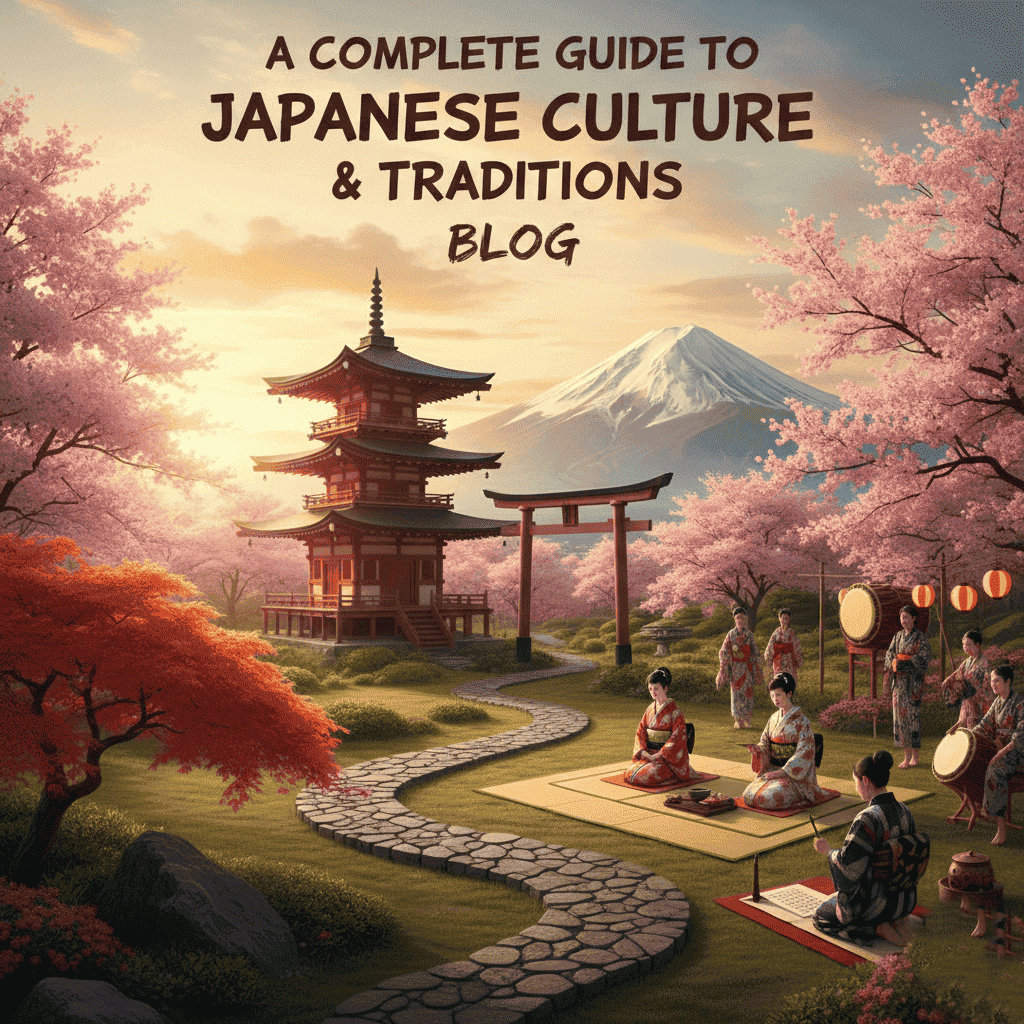
A Complete Guide to Japanese Culture & Traditional
In Japan, cutting-edge modernity and age-old customs coexist harmoniously. Japanese culture and customs offer an intriguing trip through time, from futuristic cities and inventive lifestyles to centuries-old temples and sacred rites. Our Japan Tour Packages offers travelers to learn more about Japanese customs in affordable prices, whether you’re planning your first visit or are just interested in its history.
Travelers, culture enthusiasts and Japan lovers will find this comprehensive guide by Fly For Holidays to Japanese culture and customs to be a must-read. It covers everything from social etiquette, festivals, food habits, religion, art, clothing, and everyday lifestyle to contemporary cultural influences.
Understanding Japanese Culture: An Overview
Respect, harmony, discipline, and mindfulness are fundamental to Japanese culture. International Tour Packages open doors to discovering global cultures and living styles that are being evolved and enhanced with time. Japan’s distinct cultural identity, which prioritizes community over individuality, has been shaped by Shintoism, Buddhism, Confucianism, and historical isolation.
Key Cultural Values in Japan
- Bows, courteous words, and demeanor are examples of Respect (Reigi).
- Harmony (Wa), preserving harmony in one’s social and professional life
- Order and Discipline are evident in everyday activities and public areas.
- Minimalism is the simplicity of aesthetics, lifestyle, and design.
From greetings to how food is presented, these ideals influence nearly every facet of Japanese culture.
Read Also: “How to Plan a Trip to Japan: The Ultimate Travel Guide”
Let Our Japan Tour Package Expert Call You
Japanese Traditions and Customs You Should Know
Bowing: The Art of Respect
A fundamental component of Japanese etiquette is bowing. It can be used to say hello, express gratitude, offer an apology, or demonstrate respect. The circumstances and interpersonal relationships are reflected in the bow’s depth and duration.
Tip: A slight bow with a smile is always appreciated.
Shoes Off Indoors
Removing shoes before entering homes, temples, ryokans (traditional inns), and occasionally restaurants are one of the most significant Japanese traditions.
- Slippers are frequently offered.
- You can use different slippers for the restroom.
- Cleanliness and regard for living areas are reflected in this custom.
Japanese Tea Ceremony (Chanoyu)
The preparation of matcha, or green tea, is the focal point of the spiritual and cultural Japanese tea ceremony. It stands for peace, harmony, respect, and purity. Tea ceremonies are still performed in cultural schools and at special occasions all over Japan.
Read Also: “Top 10 Must-Visit Places in Japan for Every Type of Traveler”
Traditional Japanese Clothing
The most recognizable traditional garment in Japan is the Kimono, which is worn at ceremonies, weddings, and festivals.
- Made from silk or cotton
- Different styles for seasons and occasions
A lighter version, the Yukata, is frequently worn at hot springs and during summer festivals.
Visitors can gain a deeper understanding of Japanese culture by dressing traditionally, particularly in places like Kyoto and Kanazawa.
Read Also: “Applying for a Japan e-Visa from India in 2025: A Comprehensive Guide”
Japanese Festivals (Matsuri)
Festivals, known as Matsuri, are vibrant celebrations of the customs, seasons, and spirituality of Japan.
Popular Japanese Festivals
- Sakura blooms are celebrated at the Japan’s Cherry Blossom Festival (Hanami).
- Kyoto’s Gion Matsuri is one of the most well-known celebrations in Japan.
- Tanabata is an ancient folklore-based star festival.
- Obon Festival, paying respect to ancestors’ spirits.
Travelers can enjoy a cultural show at festivals that include elaborate floats, food vendors, traditional music, and dance.
Religion and Spiritual Beliefs in Japan
Shintoism and Buddhism are the two main religions practiced in Japan, and they frequently coexist peacefully.
Shintoism
- Focuses on nature and kami (spirits)
- Shrines marked by torii gates
- Ritual purification is common
Buddhism
- Influences funerals and philosophy
- Zen Buddhism encourages meditation and mindfulness.
In Japan, religion is more about customs and way of life than it is about rigid belief.
Japanese Food Culture and Dining Etiquette
Japanese Food Culture is praised all over the world for its presentation, balance, and freshness.
Popular Foods in Japan
- Sashimi and Sushi
- Udon and Ramen
- Tempura
- Bento boxes
- Mochi and traditional sweets
Japanese Dining Etiquette
- Saying “Itadakimasu” prior to eating
- Noodles can be slurped.
- Chopsticks should not be inserted upright into rice.
- Avoid leaving tips at restaurants.
In Japan, food is an art form as well as a source of nourishment.
Japanese Art, Craft & Aesthetics
Elegance and simplicity are reflected in traditional Japanese art.
Famous Japanese Art Forms
- Ikebana: An arrangement of flowers
- Origami: Folding paper
- Shodo calligraphy
- Woodblock prints, or ukiyo-e
Wabi-Sabi, or impermanence and imperfection, is emphasized in Japanese aesthetics.
Traditional Japanese Homes and Architecture
Japanese architecture prioritizes simplicity and the natural world.
- Flooring with tatami mats
- Shoji and Fusuma sliding doors
- Very little furniture
- Natural ventilation and light
Conventional architecture reflects a tranquil way of life by fusing beauty and utility.
Modern Japanese Culture: Tradition Meets Innovation
Japan is a global trendsetter despite its strong traditions.
Elements of Modern Japanese Culture
- Manga and Anime
- J-Pop and fashion areas such as Harajuku
- Cities with advanced technology, such as Tokyo and Osaka
- Pop culture and gaming
Japanese culture is genuinely distinct because of this smooth fusion of the old and the new.
Japanese Work Culture and Daily Life
Japanese workplace culture places a strong emphasis on:
- Punctuality and discipline
- Cooperation and devotion
- Extended workdays
Japan is one of the safest and most organized places to travel because daily life there is orderly, hygienic, and productive.
Let Our Japan Tour Package Expert Call You
Why Understanding Japanese Culture Matters for Travelers
Travelers benefit from learning about Japanese traditions and customs:
- Avoid cultural misunderstandings
- Show respect to locals
- Enjoy deeper, more authentic experiences
Every journey is improved by cultural awareness, from dining with respect to properly greeting locals.
Experiencing Japanese Culture as a Tourist
To become fully immersed in Japanese culture:
- Remain in a traditional ryokan
- Take part in a tea ceremony
- In Kyoto, dress in a kimono.
- Go to a local celebration
- Go to shrines and temples
The most memorable aspects of a trip to Japan are frequently the cultural encounters.
Final Thoughts: The Timeless Beauty of Japanese Culture
Tradition, respect, creativity, and harmony are all beautifully balanced in Japanese culture. Every element, from the thrill of a festival to the subdued elegance of a tea ceremony, conveys a tale molded by centuries of history. For tourists, Japan is more than just a place to visit; it’s an experience that lingers long after the trip is over. Discovering Japanese customs and culture will make your next trip genuinely unforgettable.
A Complete Guide to Japanese Culture & Traditional
Respect, discipline, harmony, traditions, and a harmonious blend of traditional and contemporary lifestyles are all hallmarks of Japanese culture.
Bowing, tea ceremonies, wearing kimonos, commemorating seasonal festivals, and observing social graces are important aspects of Japanese culture.
The best seasons are spring (March–April) for cherry blossoms and fall (October–November) for festivals and nice weather.
In formal interactions, greetings, expressions of gratitude, and apologies, bowing is a sign of respect.
Shoes should be taken off indoors, loud behavior should be avoided in public, dining manners should be followed, and local customs should be respected.
Although English is widely understood in tourist areas, Japanese is the primary language.
Japanese festivals feature traditional dance, music, costumes, cuisine, and a sense of community.
Yes, visitors can take part in calligraphy classes, festivals, tea ceremonies, kimono experiences, and temple stays.
Through the coexistence of high-tech cities, anime culture, fashion trends, and historic temples, Japan successfully combines tradition and modernity.
Sushi, ramen, tempura, bento meals, fresh ingredients, and creative presentation are all hallmarks of Japanese cuisine culture.


Comment (0)