Schengen Visa For Indians

Schengen is an area in Europe without internal borders with a bunch of 27 countries, each with an array of excitements and full of gorgeous and unique tourist destinations where everyone definitely wants to visit once in their life and require a Schengen visa to enter in any of these 27 Country.


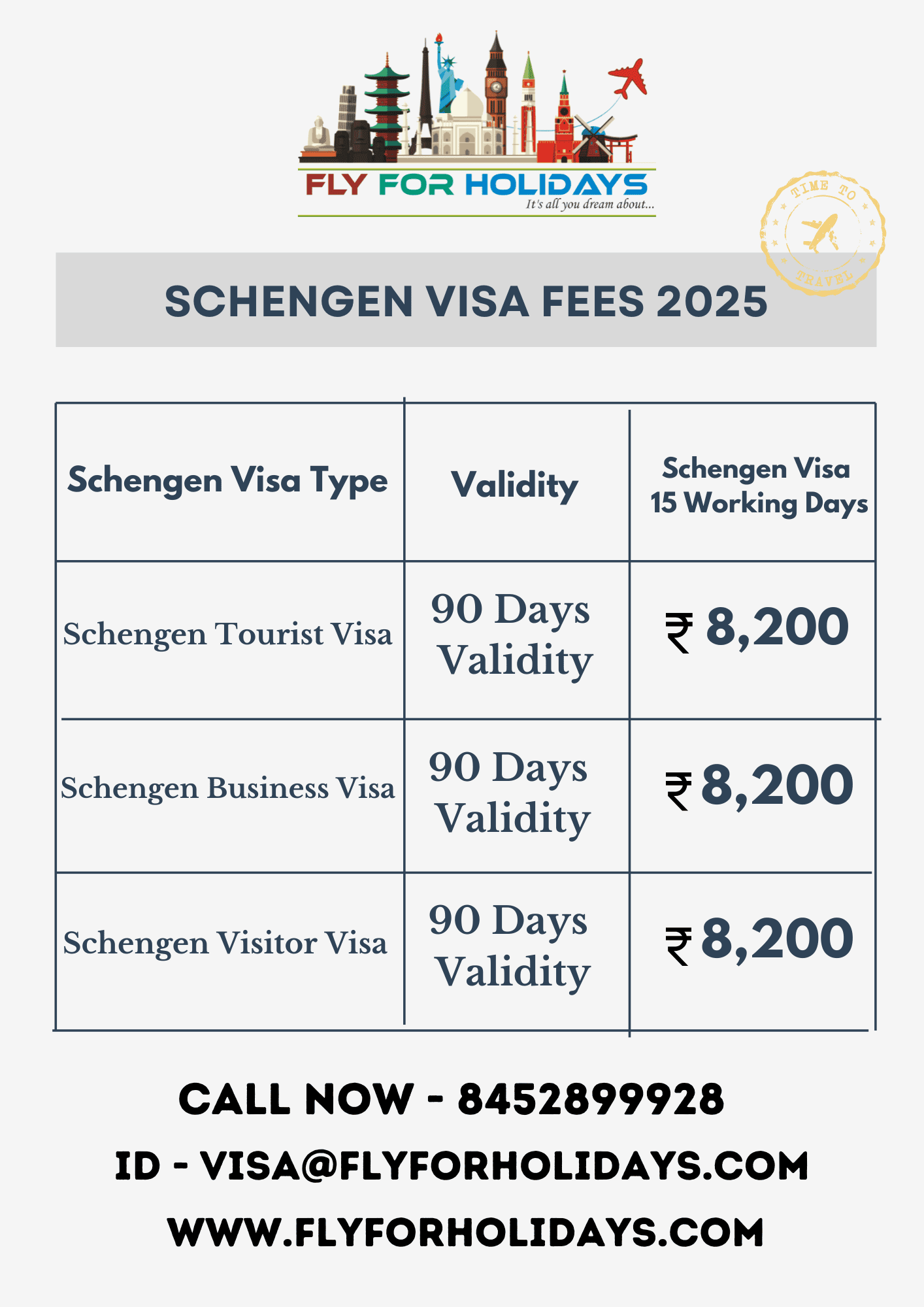
Schengen Visa Fees for Indians in 2025

The table below shows the Schengen visa fees for Indian citizens as of 2025. The Schengen Visa fees are in Euro (EUR) and Indian rupees (INR). The Schengen Visa fees are subject to change without notice, so you should check the current Schengen Visa cost on the Schengen VFS website before applying for your Schengen visa from India in 2025.

Schengen Tourist/Visitor Visa 

Visa Validity90 Days
Stay Period30 Days
Processing Time10-15 Working Days
Entry Single/Multiple
Service ChargeINR 2,950
Total Visa FeesINR 11,950

Schengen Business Visa 

Visa Validity90 Days
Stay Period30 Days
Processing Time10-15 Working Days
Entry Single/Multiple
Service Charge INR 2,950
Total Visa FeesINR 11,950

Let Our Schengen Visa Expert Call You ​

  • Schengen Tourist Visa – Tourist Visa allows you to visit Schengen countries for tourism purposes. Validity depends as per the conditions mentioned on the visa.
  • Schengen Business Visa – Business Visa allows you to visit Schengen Countries for attending Business meetings, Seminar’s, Conference, Trade Fair, and Short Term Training. The validity of the visa depends on the conditions mentioned on the visa.
  • Schengen Transit Visa – Transit Visa allows you to transit through any Schengen country while traveling to the third country. Validity as mentioned on the visa.
  •  Schengen work visa – Work Visa allows you to work in any of the Schengen nations providing you meet all the criteria for the same. The validity will be normally of 2 years or as per visa conditions.
  • Schengen dependent visa – Dependent Visa allows spouse, children, and parents of the person residing in the Schengen nations as dependent on him/her.
  • Schengen student visa – Student visa allows bonafide students to visit Schengen nations to complete higher studies. The period of study must be of more than 90 days and up to 6 months. Validity depends on the course or as per the conditions. Employment is not allowed on Student Visa.
  • Cultural sports, religious events & film crew – This visa allows the people to visit Schengen who wants to be a part of cultural sports, religious events or as a film crew. Validity as per the visa conditions.
     

The requirements for a Schengen visa from India may vary depending on the type of visa and the country that you are applying to. However, some of the general requirements that apply to all types of Schengen visas are:

  • Valid passport (3 months from arrival).
  • Three photos (35 x 45 mm, matt, white, 80% face).
  • Schengen Visa form.
  • Cover letter & itinerary.
  • Bank statement signed & stamped (latest 6 months).
  • Income Tax Returns (3 years).
  • Return ticket & hotel booking.
  • Travel Insurance (Minimum 30,000 euro)
  • For Self-employed: Bank statement & Tax returns.
  • For Minor: Birth Certificate, school/college ID card

The process of applying for a Schengen visa from India in 2025 is as follows:

  1. Choose a country:
    First Choose which country visa you need to apply. If you are visiting only one Schengen country, you should apply to the embassy or consulate of that country. If you are visiting multiple Schengen countries, you should apply to the embassy or consulate of the country where you will spend the most time.
  2. Book an appointment:
    Book a Schengen visa appointment online with VFS Global, You can choose the date and time of your Schengen visa appointment according to the availability. You should book your appointment at least 15 days before your intended departure date, but not more than 90 days in advance.
  3. Fill Schengen visa application:
    Fill out the Schengen visa application form online and print it out. You can find the Schengen visa form on the website of VFS Global or the embassy or consulate of the country that you are applying to. You should fill out the form carefully and honestly, and sign it at the end.
  4. Gather required documents:
    Gather all the required documents for Schengen visa and make photocopies of them. You should arrange them in the order specified by VFS Global or the embassy or consulate of the country that you are applying to. You should also keep a copy of all the documents for your own reference.
  5. Attend Schengen visa Appointment:
    Visit the VFS Global office on the day and time of your Schengen visa appointment. carry all required documents. You should arrive at least 15 minutes before your Schengen visa appointment time and follow the instructions given by the staff. You will have to submit your biometric data, such as fingerprints and photograph, at the VFS.
  6. Track your Schengen visa:
    Track your Schengen visa application status online or by SMS or email. You can check the status of your Schengen visa application on the website of VFS Global or by calling their helpline number. You will be notified when your passport is ready for collection or delivery.
  7. Collect your passport:
    Collect your passport from VFS Global or receive it by courier. You can choose to collect your passport in person from the VFS Global office where you applied, or opt for courier delivery to your address for an additional fee. You should check your visa sticker carefully and make sure that all the details are correct.

The processing time for a Schengen visa depends on several factors, such as:

  • The type of visa and the country that you are applying to.
  • The volume of applications and the peak season.
  • The completeness and accuracy of your application and documents.
  • The need for additional verification or consultation.

In general, it takes around 12-15 days to process a Schengen visa application from India, but it can take longer in some cases. Therefore, it is advisable to apply for your Schengen visa well in advance of your travel date.

After you have applied for a Schengen visa, you might want to know how to track your Schengen visa status from India. depending on where you submitted your Schengen visa application.

The most common way to apply for a Schengen visa from India is through VFS Global, a third-party service provider that handles Schengen visa applications for many Schengen countries. To track your Schengen visa status with VFS Global, follow these steps:

  • Go to the VFS Global website (https://www.vfsvisaonline.com/).
  • Select the country you applied from (India) and the country you are going to (the Schengen country that is your main destination or the first one you will enter).
  • Click on “Take me to the website”.
  • Go to “Track your application” and click on “Track your visa application status online”.
  • Enter your name and the reference number you received when you submitted your application.
  • Click on “Submit” to view the status of your application.

You can also sign up for SMS alerts from VFS Global to receive updates on your visa status via text message.


Page Title

Why Choose Fly For Holidays?

Real Time Support​

Get Real time support for all your queries. We are available 24*7 during tour​

Up to Date

We keep ourself up to date with latest updated and policies laid by the Visa Offices

Big Savings​

Our service fees are the most competitive in the market

Satisfaction is Guaranteed​

Keeping in mind about your budget, we guarantee 100% Satisfaction​

Page Title

Love From Clients

Feedback Summary Feedback Summary
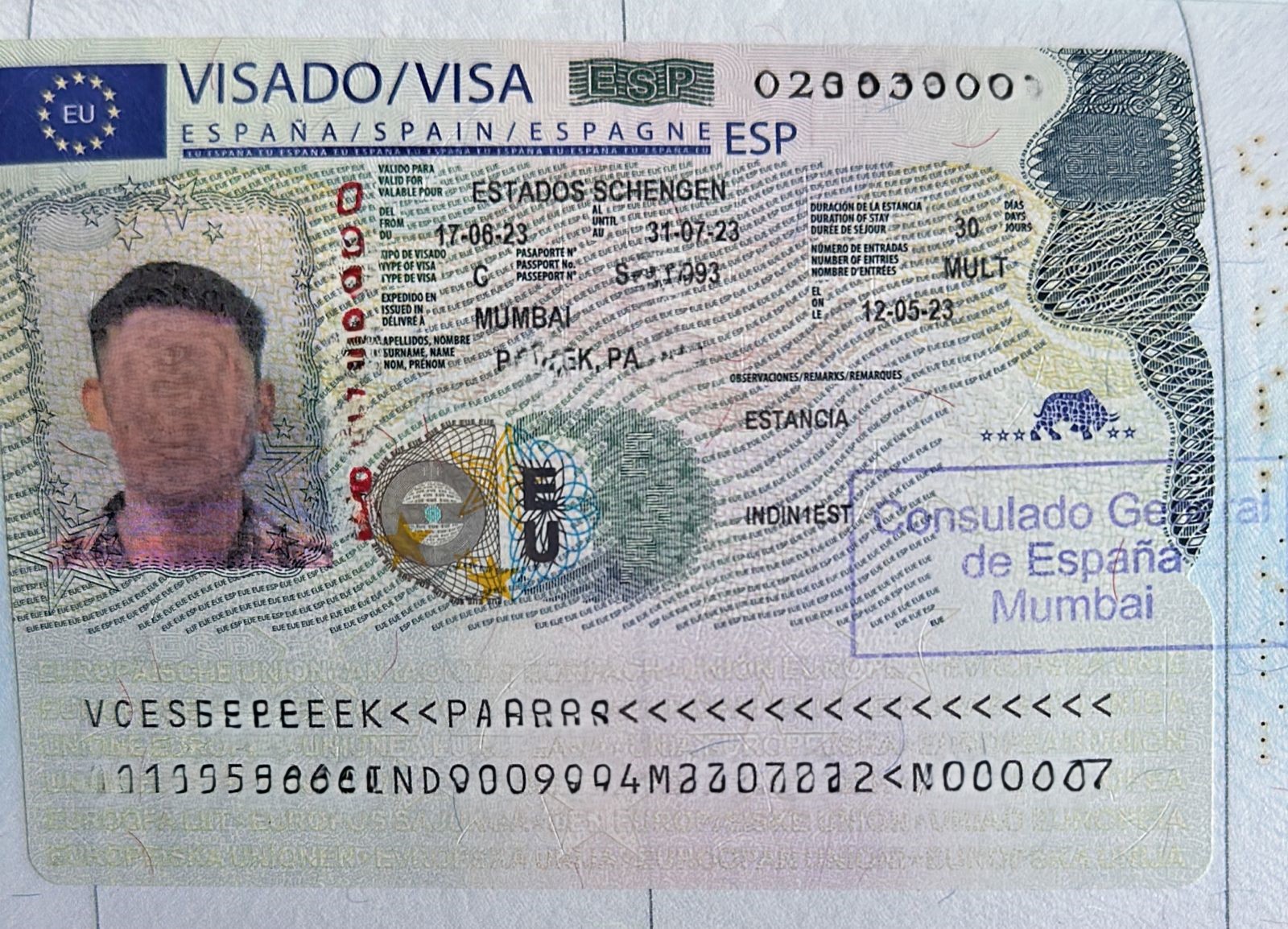
Schengen Visa Sample
Spain Visa For Indians -Fly For Holidays
  • Carry Original Valid Passport;
  • Make sure your to check Schengen Visa validity;
  • Confirmed return Flight Ticket is must;
  • Contact details of your family, relatives or business contact in Schengen Area;
  • Confirmed hotel bookings or stay proof;
  • Euro Currency in cash or Foreign Exchange Receipt;
  • Android Phone, preferably with a Particular Country SIM card from India;
  • Any additional documents like valid visa if traveling to third country.
  • Should have a valid Passport and valid Schengen Visa;
  • Make sure you are adhering the travel plan which was shown at the time of applying Schengen Visa.
  • Make sure you are well fit;
  • Can communicate properly;
  • Should be able to understand What Immigration Officer is asking and has to make sure to reply quickly with confidence.
  • You should be able to convince the officer that you have sufficient funds and you will exit the country before your visa expires.

Service tags: Schengen visa, schengen visa for indians,schengen tourist visa,schengen business visa, schengen visa priority,schengen visa express, schengen visa from Mumbai, schengen visa from delhi

    Apply Online


    ₹0

    Scan to Pay with GPay

    GPay QR Code

    Pay Only If You See Fly For Holidays On Your App

    These are FFH Service Charge, Govt Fees Are Payable at the time of Documents Submission

    Once payment is completed, click below:

    FAQ by Topic - Expand by Heading

    Frequently Asked Questions

    What is a Schengen Visa
    What is a Schengen Visa?
    A Schengen Visa is a short-stay visa that allows you to travel across 27 European countries without internal borders. It permits stays of up to 90 days within a 180-day period. This visa is mainly used for tourism, business, or visiting family/friends. It does not allow long-term work or study.

    Which countries are part of the Schengen Area?
    The Schengen Area includes 27 European nations like Germany, France, Italy, and Spain. It also includes countries like Switzerland, Norway, and the Netherlands. These countries have removed internal border checks for travellers. Once inside, you can move freely between them.

    Who needs a Schengen Visa to enter Europe?
    Citizens of countries like India, Pakistan, China, Nigeria, and the Philippines need a Schengen Visa. If your country is not part of the visa-exempt list, you must apply before travel. The visa must be obtained from the consulate of the main destination. Visa-free countries include the U.S., Canada, Japan, and Australia.

    Can I travel to all Schengen countries with one visa?
    Yes, with one valid Schengen Visa, you can visit all 27 Schengen countries. It doesn't matter which country issued the visa, as long as it's valid. However, you must apply through the country that is your main travel destination. You should also enter through that country if possible.

    What type of visa is the Schengen Visa?
    The Schengen Visa is officially called a Type C short-stay visa. It allows a stay of up to 90 days for tourism, business, or family visits. This visa is not suitable for studying or working long-term. For longer stays, you need a national visa of that country.

    Do I need a Schengen Visa for airport transit?
    Some travellers need a Type A Airport Transit Visa if they’re changing flights in a Schengen airport. This depends on your nationality and destination. Most travellers do not need a transit visa if they stay within the airport zone. Check the rules of the specific Schengen country you’re transiting through.

    Is the Schengen Visa valid for multiple entries?
    You can apply for a single-entry, double-entry, or multiple-entry visa. A multiple-entry visa allows you to enter and exit the Schengen Zone several times. Validity can range from a few days to up to 5 years. Always check your visa label for the number of entries allowed.

    Do I need a visa if I have a residence permit in a Schengen country?
    No, a valid residence permit from any Schengen country lets you travel freely within the zone. You don’t need a separate visa to move between Schengen states. But you must carry your permit and passport when traveling. This doesn’t apply to residence permits from non-Schengen countries.

    Are there any exemptions from the Schengen Visa requirement?
    Yes, travellers from countries like the U.S., Canada, and Japan can visit visa-free. They can stay up to 90 days in any 180-day period without a visa. From 2025, these travellers will need an ETIAS travel authorization. This is not a visa but a security screening system.

    Can dual citizens choose which passport to use?
    Yes, dual nationals can choose the passport that gives them visa-free access. Make sure to use the same passport when applying, flying, and crossing borders. Avoid switching passports during travel in the Schengen Area. Your travel documents must match at all checkpoints.

    Which countries require a Schengen visa?
    Citizens of India, Pakistan, Nigeria, Philippines, Sri Lanka, Egypt, and many other non-EU countries need a Schengen visa. The full list includes over 100 countries. Visa requirements depend on nationality and purpose of visit. You can check eligibility on the EU immigration portal.

    What is the purpose of a Schengen visa?
    A Schengen visa allows short-term travel (up to 90 days) across 27 European countries in the Schengen Area. It covers tourism, business, family visits, events, or short courses. It does not permit long-term stays or work unless otherwise stated. It’s ideal for multi-country travel within Europe.

    Who is required to have a Schengen visa?
    Non-EU/EEA citizens from countries without visa-free access to the Schengen Zone must apply. This includes most countries in Asia, Africa, and parts of South America. Even transit through a Schengen airport may require a visa. Exemptions apply for holders of valid EU/Schengen permits or some diplomatic passports.

    What 5 countries are not in Schengen?
    Five major European countries not in the Schengen Area are:
    • Ireland
    • Romania
    • Bulgaria
    • Cyprus
    • Croatia (now part of Schengen as of 2023)
    These countries have separate visa policies, even if they're in the EU.
    How to Apply for a Schengen Visa+
    Where can I submit my Schengen Visa application?
    You must apply at the embassy, consulate, or official visa center of your main destination country. If visiting multiple countries, apply to the one where you'll stay the longest. Some countries outsource visa applications to authorized centers like VFS Global or BLS. Always verify the correct application point before booking an appointment.

    How far in advance should I apply for a Schengen Visa?
    You can apply up to 6 months before your planned trip (9 months for seafarers). It’s recommended to apply at least 15 working days before your departure. During peak travel times, processing can take longer. Plan early to avoid last-minute delays or rejections.

    How do I fill out the Schengen Visa application form?
    You can usually fill out the visa form online or download it from the embassy’s website. Provide accurate details matching your passport and travel plans. Include itinerary, contact information, and purpose of visit clearly. Any false or inconsistent information can lead to rejection.

    Do I need to book a visa appointment?
    Yes, most Schengen countries require a prior appointment to submit your application. You can book it online through the embassy or via an authorized visa center. Appointment slots fill quickly, especially during travel seasons. Some applicants wait weeks for available dates, so plan early.

    What documents are required for the visa application?
    You’ll need your passport, visa form, travel insurance, proof of accommodation, and return flights. Also include financial proof like bank statements or sponsorship letters. Additional documents may be required based on your visa type. Always check the official checklist of your destination country.

    Is travel insurance mandatory for a Schengen Visa?
    Yes, valid travel insurance is required covering medical emergencies up to €30,000. It must be valid for the entire duration of your stay in the Schengen Zone. The insurance must cover all Schengen countries, not just your main destination. Policies without proper coverage will lead to visa refusal.

    Do I need to attend a visa interview?
    Yes, first-time applicants usually have to attend a short interview. The visa officer may ask about your travel purpose, itinerary, and ties to your home country. Answer honestly and confidently with supporting documents. If you’ve applied before, interviews may be waived in some cases.

    How do I pay the Schengen Visa fee?
    Visa fees are usually paid in local currency at the time of your appointment. Payment methods depend on the embassy or visa center — cash, card, or bank transfer. As of 2025, the standard fee for adults is around €80. Fees are non-refundable, even if your visa is denied.

    Can I apply for a Schengen Visa online?
    Some countries allow partial online applications or form submission. However, biometrics and documents must usually be submitted in person. You may also need to collect your passport from the visa center. Full online processing is rare but evolving in some countries.

    How will I know if my Schengen Visa is approved?
    You’ll be notified via email, SMS, or portal update once a decision is made. Your passport will show the visa sticker with dates, duration, and number of entries. If rejected, you’ll receive a letter explaining the reason. Always double-check your visa details before travelling.
    Schengen Visa Requirements+
    Do visa requirements differ between Schengen countries?
    Yes, while the core requirements are standardized, some countries may ask for extra documents. For example, Spain might request additional financial proof, while Germany may need more specific travel insurance. Always check the official embassy website of your main destination. Meeting country-specific requirements helps prevent delays or rejection.

    How do I know which embassy to apply to for a Schengen Visa?
    Apply to the embassy of the country you’ll spend the most time in during your trip. If all stays are equal, apply to the country of first entry. Submitting to the wrong embassy can lead to rejection or redirection. Plan your itinerary carefully before applying.

    What documents are commonly required for all Schengen Visas?
    You’ll need a valid passport, completed visa application form, passport photos, and proof of travel insurance. Also required: accommodation proof, return flight bookings, and financial statements. Each embassy may also require country-specific documents. Always follow the updated checklist from the official site.

    Do some countries require extra documents?
    Yes, certain embassies ask for additional paperwork like tax returns, employment contracts, or invitation letters. For instance, the French embassy may request proof of family ties if visiting relatives. These requirements are based on risk profiles and visa abuse statistics. Check embassy guidelines before gathering your documents.

    Does the language of documents matter?
    Yes, documents should be in English or the official language of the destination country. Some embassies require certified translations of key documents like bank statements or birth certificates. If your documents are not in an accepted language, have them officially translated. Untranslated documents can delay or derail your application.

    Are embassy rules different depending on your nationality?
    Yes, applicants from some countries may face stricter scrutiny or additional document requests. This is due to visa refusal rates or illegal immigration risks. Always check if your nationality has specific guidelines or extra forms. Tailor your application accordingly to avoid unnecessary issues.

    Are fingerprint scans and biometrics required for all applicants?
    Yes, biometrics (fingerprints and a photo) are required for most applicants unless exempt. They are usually valid for 5 years across all Schengen countries. If you applied before and your biometrics are still valid, you may not need to repeat them. First-time applicants must provide biometrics in person.

    Can I submit the same documents for any Schengen country?
    Most basic documents are the same, but additional requirements can differ. For example, the Netherlands might request proof of professional status, while Italy may not. Don’t assume all embassies accept the same paperwork. Customize your document set for your destination country.

    Do all Schengen countries require proof of accommodation?
    Yes, accommodation proof is mandatory hotel bookings, Airbnb reservations, or invitation letters. Some embassies want the entire stay covered; others accept partial bookings. If staying with friends or family, include an official invitation. Unclear or missing accommodation can cause rejection.

    Can embassy requirements change over time?
    Absolutely, visa rules and document checklists can change without much notice. These changes may reflect diplomatic relations, migration trends, or seasonal updates. Always refer to the latest information from the official embassy site. Outdated documents or forms can lead to automatic rejection.
    Schengen Visa Cost+
    What is the standard fee for a Schengen Visa?
    As of 2025, the standard fee for an adult Schengen Visa is €90. Children between 6–12 years pay a reduced fee of €45, while under-6s are exempt. Fees may vary slightly based on the country or exchange rates at visa centers. The fee is non-refundable, even if your application is rejected.

    Are there any discounts or exemptions for certain applicants?
    Yes, some groups like students, researchers, children under 6, and spouses of EU citizens may qualify for free or reduced fees. The rules vary slightly by embassy. Provide proof of eligibility, like enrollment letters or marriage certificates. Check the latest exemptions before applying.

    Are the visa fees the same in every country?
    The base visa fee (in euros) is the same across all Schengen countries. However, local visa centers may charge service fees in local currency. These fees vary depending on the country you're applying from. Always check your local visa application center's pricing details.

    What additional costs should I expect beyond the visa fee?
    In addition to the visa fee, you might pay a service charge, courier fee, or biometrics fee. You may also spend on document translations, notarizations, or travel insurance. These costs are not included in the visa fee and vary by provider. Budget accordingly for the full application process.

    Can I get a refund if my visa is denied or I cancel the trip?
    No, the Schengen Visa fee is non-refundable under any circumstance. Even if you cancel your appointment or your application is rejected, the money won't be returned. This also applies if you miss your visa appointment. Be prepared to lose the fee if plans change.

    How do I pay the Schengen Visa fee?
    Payment methods depend on the embassy or visa application center. Most accept cash, debit/credit cards, or bank transfers, but not all methods are available everywhere. Some centers require payment in local currency. Confirm payment methods before your appointment to avoid delays.

    Are there different fees for single-entry and multiple-entry visas?
    No, the fee is generally the same regardless of whether your visa is single, double, or multiple-entry. The number of entries granted depends on your travel history and purpose. Even if you request a multiple-entry visa, the fee remains unchanged. Issuance is at the discretion of the consulate.

    Do I have to pay for biometrics separately?
    Usually, biometrics are included in the visa application fee. However, some visa centers may charge a separate service fee for collecting biometric data. This is more common at outsourced centers like VFS or TLScontact. Always review the center’s fee breakdown before booking.

    Can visa fees change over time?
    Yes, visa fees are periodically revised by the EU. They can increase due to inflation, policy changes, or administrative costs. Always check the most up-to-date fee structure before applying. Old fee charts can lead to underpayment and application rejection.

    Do I need to pay again if I reapply after rejection?
    Yes, each visa application requires a new payment, even if the last one was denied. There’s no fee waiver for repeat applicants. You must also provide updated documents and reasons for reapplying. Make sure to address the issues from your previous rejection.
    Duration Schengen Visa +
    How many days can I stay in the Schengen Area with a visa?
    With a short-stay Schengen Visa, you can stay up to 90 days within a 180-day period. The count starts from the day you enter any Schengen country. You can’t exceed 90 days, even if you travel to multiple countries. Staying beyond this limit is considered overstaying.

    What is the 90/180-day rule?
    This rule means you can stay for a maximum of 90 days in any rolling 180-day window. It applies to both visa holders and visa-exempt travelers. Day 1 starts when you enter the Schengen Area. You must track your days carefully to avoid overstaying.

    How is the 180-day period calculated?
    It’s a rolling window that moves with each day of your stay. Count back 180 days from any given date to see how many days you’ve already used. Only the days you are inside Schengen count. Online calculators can help you avoid miscalculation.

    Can I extend my Schengen Visa while in Europe?
    Schengen Visa extensions are rare and granted only in exceptional cases. Examples include medical emergencies or humanitarian reasons. Tourism or personal reasons are not valid for extensions. Apply well in advance if your situation qualifies.

    What happens if I overstay my visa?
    Overstaying can lead to fines, deportation, or future visa bans. Even one day over the limit may be reported to EU immigration authorities. You may also face trouble re-entering the Schengen Area. Always leave before your visa expires or your 90 days are up.

    Can I leave and re-enter to reset the 90 days?
    No, leaving Schengen temporarily does not reset your 90-day allowance. You must stay outside the Schengen Area until your 180-day window resets. Attempting to game the system can lead to entry bans. Use a visa calculator to plan correctly.

    What is a multiple-entry Schengen Visa?
    A multiple-entry visa lets you enter and leave the Schengen Area multiple times. You must still follow the 90/180-day rule. It’s useful for business travelers or frequent visitors. Validity can range from a few months to 5 years.

    Can I work or study during my 90-day visit?
    No, a Schengen short-stay visa does not allow full-time work or study. You may attend short events, training, or business meetings. For jobs or academic courses, apply for a national long-stay visa. Violating this can result in penalties or blacklisting.

    Does time spent in non-Schengen EU countries count?
    No, time spent in non-Schengen countries (like Ireland, Romania, or Cyprus) does not count toward the 90 days. You can travel there separately under their visa rules. Make sure to distinguish between EU and Schengen. They’re not the same.

    How do border authorities track my stay duration?
    Authorities use passport stamps, biometric records, and travel databases. Your entry and exit dates are logged and checked at borders. If you overstay, it will be recorded in the EU Entry/Exit System (EES). Stay within limits to avoid legal consequences.
    What Documents Are Required for a Schengen Visa? +
    What are the basic documents required for a Schengen Visa?
    You’ll need a valid passport, visa application form, two passport-size photos, and visa fee payment. Other essentials include travel insurance, flight reservation, and proof of accommodation. Documents must be recent and match your travel plan. Incomplete applications can lead to immediate rejection.

    How old should my passport be to apply?
    Your passport must be issued within the last 10 years and valid for at least 3 months after your return date. It must also have at least two blank pages for visa stamps. Passports not meeting these conditions will be rejected. Renew your passport first if needed.

    Is travel insurance mandatory for a Schengen Visa?
    Yes, insurance is required and must cover at least €30,000 in medical expenses. It should be valid for the entire duration of your trip and cover all Schengen countries. Policies without proper coverage are a common reason for rejection. Always submit a certificate or policy copy.

    What financial proof is needed for a Schengen Visa?
    You must show you can support yourself — typically bank statements from the past 3–6 months. Some embassies may ask for salary slips, tax returns, or sponsor letters. The required amount varies by country and length of stay. Always check the specific financial guidelines.

    Do I need a flight booking for a Schengen Visa?
    Yes, you must provide a round-trip flight reservation or booking. You don’t have to buy the ticket before the visa is granted. Use a travel agency or booking service that provides dummy tickets. Embassies don’t recommend buying non-refundable tickets in advance.

    Is hotel booking or accommodation proof necessary?
    Yes, provide hotel reservations, Airbnb confirmations, or an invitation letter from a host. The embassy must see where you’ll be staying throughout your trip. If staying with friends or family, they must provide a formal declaration. Inadequate accommodation proof is a common rejection reason.

    What documents do employed applicants need?
    Employed applicants must include a letter from their employer, recent payslips, and approved leave documents. This shows ties to your home country and that you’ll return after your trip. It also strengthens the credibility of your application. Include company contact info in case of verification.

    What if I’m self-employed or a freelancer?
    Self-employed applicants must submit business registration documents, tax returns, and recent bank statements. Freelancers should include invoices, contracts, or client letters. It’s important to prove a stable income source. The more transparent your documents, the better your chances.

    What are the document requirements for students?
    Students must submit an enrollment certificate, leave approval from their institution, and proof of funds. If parents are sponsoring the trip, include a sponsorship letter and their financial documents. A copy of the student ID is also useful. Scholarship holders should attach proof of scholarship.

    Do minors need extra documents for a Schengen Visa?
    Yes, minors need birth certificates, copies of parents’ passports, and notarized consent letters if traveling alone or with one parent. The parent(s) must also submit a sponsorship letter and proof of finances. These documents ensure the child’s safety and compliance. Make sure all are translated if required.
    Visa Rejection and Reapplication for Schengen Visa+
    What are the common reasons for Schengen Visa rejection?
    Common reasons include insufficient financial proof, unclear travel purpose, incomplete documents, invalid travel insurance, or doubts about your return intentions. Inconsistent or false information also leads to rejection.

    Can I appeal a Schengen Visa rejection?
    Yes, you can appeal the decision by submitting a formal appeal letter to the embassy that rejected your visa. Each country has its own appeal process and deadlines—usually within 15 to 30 days.

    How long does the appeal process take?
    It can take anywhere from a few weeks to several months, depending on the country and case complexity. Embassies will notify you once a decision is made. There is no guaranteed time frame.

    What should I include in a visa appeal letter?
    Include your personal details, visa application reference number, reason for travel, and a detailed rebuttal of the reasons for rejection. Attach supporting documents that were missing or unclear previously.

    Can I reapply after a visa rejection?
    Yes, you can reapply at any time, but it’s advised to address the reasons for the previous rejection. Provide improved documentation and a clear explanation in your new application.

    Should I reapply at the same embassy?
    Usually, yes. If your travel plans remain unchanged, reapply through the same embassy. If you change your itinerary significantly, apply to the appropriate consulate based on the new travel plan.

    Is there a waiting period before reapplying?
    There’s no official waiting period, but you should only reapply once you’ve addressed the issues that led to your rejection. Rushing into a new application without changes often leads to another refusal.

    Do I need to pay the visa fee again when reapplying?
    Yes, you must pay the full visa fee again with each new application. Visa fees are non-refundable, even if your previous application was rejected.

    Does a previous rejection affect future visa applications?
    It can. Schengen countries share visa records, so a rejection is visible to all member states. However, a strong new application can still result in approval if the previous issues are resolved.

    Can using a visa agent reduce the chances of rejection?
    A visa consultant or agency can help with documentation and scheduling, but they don’t guarantee approval. Only embassies make visa decisions. Always ensure your application is accurate and honest.
    Schengen Visa for Invitations+
    Can I apply for a Schengen Visa to visit family or friends?
    Yes, the Schengen short-stay visa covers family and friend visits. You’ll need an invitation letter from your host, along with proof of relationship and accommodation.

    What should be included in the invitation letter?
    It must include your host's full name, address, contact information, relationship to you, travel dates, and confirmation of accommodation. It should be signed and dated by the host.

    Is a notarized invitation letter necessary?
    Some Schengen countries require notarized or officially approved invitation letters, especially if the host is covering your expenses. Check the embassy's guidelines for your country of application.

    What financial documents are required for family visit visas?
    You must show proof of financial means (bank statements, payslips, etc.). If the host is sponsoring you, they must provide a sponsorship letter and financial documents like tax returns and salary slips.

    Do I need proof of relationship with the person I’m visiting?
    Yes. You should submit documents like birth certificates, marriage certificates, or photos, emails, and chat logs that demonstrate a genuine relationship. Translations may be required.

    Can my family member sponsor my entire trip?
    Yes, but they must provide formal documentation, including a sponsorship letter, their ID/passport copy, proof of legal residence (if applicable), and financial documents.

    What documents does the host need to submit?
    The host must usually provide:
    • Invitation letter
    • Copy of their ID or residence permit
    • Proof of address (like utility bill or rental contract)
    Financial proof if sponsoring

    Can I stay at a family member’s house instead of booking a hotel?
    Yes, but you must provide an official invitation or accommodation declaration from the family member. Some countries require this to be signed at a municipal office.

    Is a family visit visa easier to get than a tourist visa?
    Not necessarily. The requirements are different but equally strict. You still need to prove financial means, strong ties to your home country, and valid travel plans.

    How long can I stay in the Schengen Area on a family visit visa?
    The duration is the same as any short-stay Schengen Visa—up to 90 days within a 180-day period. Overstaying is not allowed, even if staying with family.
    #exploreWORLD (2)

      Connect With Our Travel Experts

      #exploreWORLD (2)

        Connect With Our Travel Experts