
South Korea Culture & Traditions From Hanbok Modern Lifestyle
South Korea is an intriguing travel destination where modern lifestyles and cutting-edge technology coexist peacefully with centuries-old customs. South Korea Tour Packages offers travelers to explore Korean culture’s rich tapestry of customs, values, food, fashion, and festivals that continue to draw tourists from all over the world, from the graceful curves of the Hanbok to the fast-paced energy of Seoul’s K-culture.
In this Fly For Holiday blog, we explore Korean customs and culture, following their development from prehistoric origins to the vibrant contemporary way of life that characterizes South Korea today.
Introduction to Korean Culture and Traditions
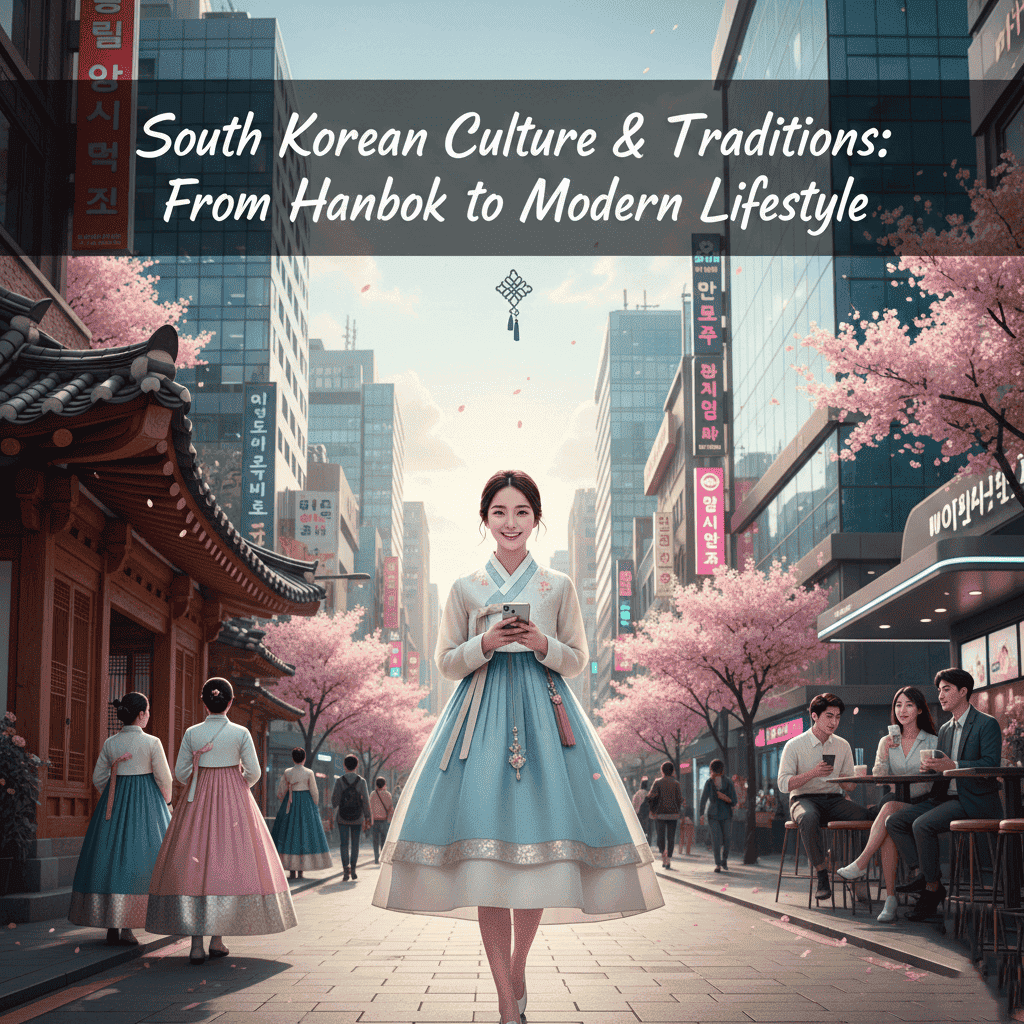
The Essence of Traditional Korean Clothing – Hanbok The traditional Korean garment known as hanbok is renowned for its vivid colors, flowing lines, and classic elegance. Hanbok, which is typically worn at festivals, weddings, and ceremonies, is a reflection of Korean social values and aesthetics.
Components of Hanbok
- Jeogori – the short jacket
- Chima – long skirt worn by women
- Baji – loose trousers worn by men
- Durumagi – outer coat for formal occasions
Each color and design once symbolized age, marital status, and social rank.
Hanbok in Modern Korea
Hanbok has developed into modern Hanbok today, fusing traditional components with cutting-edge style. At palace’s like Gyeongbokgung, visitors can experience wearing Hanbok, which enhances their cultural experience.
Read Also: “How to Plan a Trip to South Korea: The Ultimate Travel Guide”
Let Our South Korea Packages Expert Call You
Korean Language and Writing System – Hangul
A unique, scientific alphabet invented in the 15th century by King Sejong the Great to boost literacy, featuring 24 simple letters.
The Beauty of Hangul
Hangul, one of the world’s most logical and scientific writing systems, is used to write Korean. King Sejong the Great created Hangul in the fifteenth century with the intention of making reading and writing simple for the average person.
Cultural Importance of Language
Language is a key tool for communicating hierarchy and respect. Honorifics are frequently used to express relationships, status, and age.
Read Also: “Top 15 Places to Visit in South Korea for Every Traveler”
Traditional Korean Food Culture
Traditional South Korean Food Culture is rooted in balance, seasonal ingredients, and communal dining, making every meal a rich cultural experience.
More Than Just a Meal
The geography, climate, and balanced philosophy of Korea are all reflected in its cuisine. The harmony of flavors, colors, and nutrition is emphasized in meals.
Popular Traditional Korean Dishes
- Kimchi: Fermented vegetables, a national staple
- Bibimbap: Mixed rice with vegetables and meat
- Bulgogi: Marinated grilled beef
- Tteokbokki: Spicy rice cakes
Communal Dining Culture
Family and social ties are strengthened by the frequent sharing of meals. The placement of side dishes (banchan) in the middle highlight unity.
Tip: Keep your South Korean Visa ready—so you don’t miss the incredible street food delights of Korean cuisine.
Korean Festivals and Traditional Celebrations
Korean festivals and traditional celebrations offer travelers with a vibrant window into the nation’s rich history, sentimental customs, and upbeat sense of community.
Major Traditional Korean Festivals
Seollal (Korean Lunar New Year): Ancestral ceremonies, family get-togethers, and customary games.
Chuseok (Korean Thanksgiving): Honoring ancestors, performing folk dances, and making food offerings.
Cultural Activities During Festivals
- Wearing Hanbok
- Performing Ganggangsullae (traditional dance)
- Playing folk games like Yutnori
Read Also: “South Korea Trip Cost from India”
Korean Family Values and Social Etiquette
As a reflection of the country’s Confucian heritage, Korean family values and social etiquette place a strong emphasis on respect for elders, close family ties, and courteous conduct.
Confucian Influence on Society
Respect for elders, hierarchy, and family loyalty are highly valued in Korean society. Everyday interactions, workplace culture, and education are all impacted by these values.
Everyday Korean Etiquette
- Bowing while greeting
- Using both hands when giving or receiving items
- Removing shoes indoors
Travelers can establish deeper connections with locals by being aware of these customs.
Read Also: “Best Time to Visit South Korea”
Traditional Korean Arts and Performances
The rich cultural legacy of Korea is reflected in traditional Korean arts and performances, which combine folk music, dance, theater, and handicrafts that have been handed down through the generations.
Music and Dance
- Pansori – traditional storytelling through music
- Samulnori – percussion-based folk music
- Talchum – mask dance drama
Traditional Crafts
- Pottery
- Hanji (traditional Korean paper)
- Calligraphy
Cultural centers and performances all over Korea help to preserve these artistic forms.
Read Also: “Applying Visa for South Korea from India in 2025”
Korean Architecture – From Hanok to Skyscrapers
From futuristic skyscrapers influencing today’s urban landscape to traditional Hanok homes built in harmony with nature, Korean architecture offers a breathtaking journey.
Hanok – Traditional Korean Houses
Hanok homes are designed to harmonize with nature, using wood, clay, and stone. They feature:
- Ondol (underfloor heating)
- Open courtyards
- Natural ventilation
Modern Urban Lifestyle
Korea’s fast modernization is exemplified by cities like Seoul and Busan, which have cutting-edge infrastructure, smart technology, and futuristic skyscrapers.
The Rise of Modern Korean Lifestyle
The modern Korean lifestyle has rapidly evolved with global trends, K-pop influence, and advanced technology, while continuing to stay connected to traditional values.
K-Pop and Global Influence
Hallyu, or the Korean Wave, is a popular culture from Korea that has swept the globe. Korean film, K-dramas, and K-pop groups have become international sensations.
Fashion and Beauty Trends
Leading the way in K-fashion and K-beauty, South Korea has an impact on street style and skincare regimens around the world.
- Technology and Daily Life
Everyday Korean life is heavily reliant on technology, from smart cafes to high-speed internet.
Let Our South Korea Packages Expert Call You
Balance Between Tradition and Modernity
Korea’s ability to embrace innovation while maintaining traditions is what really sets it apart. Traditional tea shops coexist with modern cafés, and ancient temples can be found next to upscale shopping centers.
This harmony is a major factor in why tourists find South Korea to be incredibly fascinating and culturally rich.
Why Korean Culture Attracts Travelers Worldwide
- Deep-rooted traditions
- Unique food culture
- Safe and modern cities
- Rich history and heritage
- Global pop culture influence
Travelers can have an immersive experience that goes beyond sightseeing by immersing themselves in Korean culture.
Conclusion: Experiencing the Soul of Korea
Korean culture is a lovely fusion of the old and the new, from the graceful elegance of Hanbok to the vibrant pulse of Korea’s modern lifestyle.
South Korea is one of the world’s most culturally engaging travel destinations because its customs are still deeply ingrained in daily life. Regardless of your interests—history, cuisine, or pop culture—Korean culture offers a voyage full of respect, learning, and life-changing encounters.
South Korea Culture & Traditions From Hanbok Modern Lifestyle Faq's
Deep respect for tradition, strong family values, and a modern lifestyle that skillfully combines pop culture, technology, and age-old customs make Korean culture distinct.
The two main Korean festivals, Chuseok (Korean Thanksgiving) and Seollal (Lunar New Year), honor ancestry, family, and cuisine.
With dishes like kimchi, bibimbap, and bulgogi served with numerous side dishes, traditional Korean cuisine emphasizes balance, health, and communal dining.
Korean traditional attire, known for its vivid colors and flowing lines, is called hanbok. It is typically worn at festivals, weddings, and other special occasions.
In Korea, you should always offer or accept objects with both hands, take off your shoes before entering any home or temple, and greet others with a gentle two-handed handshake and small bow.
Samulnori (percussion music), Talchum (mask dance drama), and Pansori (musical storytelling) are popular traditional performances.
Korean architecture includes everything from futuristic skyscrapers and smart-city designs found in Seoul and Busan to organic, wooden Hanok homes. Open areas, graceful lines, and balance with nature have been given top priority.
Korean values like hierarchy, respect for families, discipline, and social harmony are shaped by Confucianism.
Favorites like tteokbokki, hotteok, odeng, and fried snacks enjoyed at busy markets are among the colorful and reasonably priced Korean street food options. It captures the adaptability and tenacity of Korean culture.
Hanok are traditional Korean homes with ondol (underfloor heating) that are constructed with natural materials and intended to blend in with the surroundings.

Comment (0)