

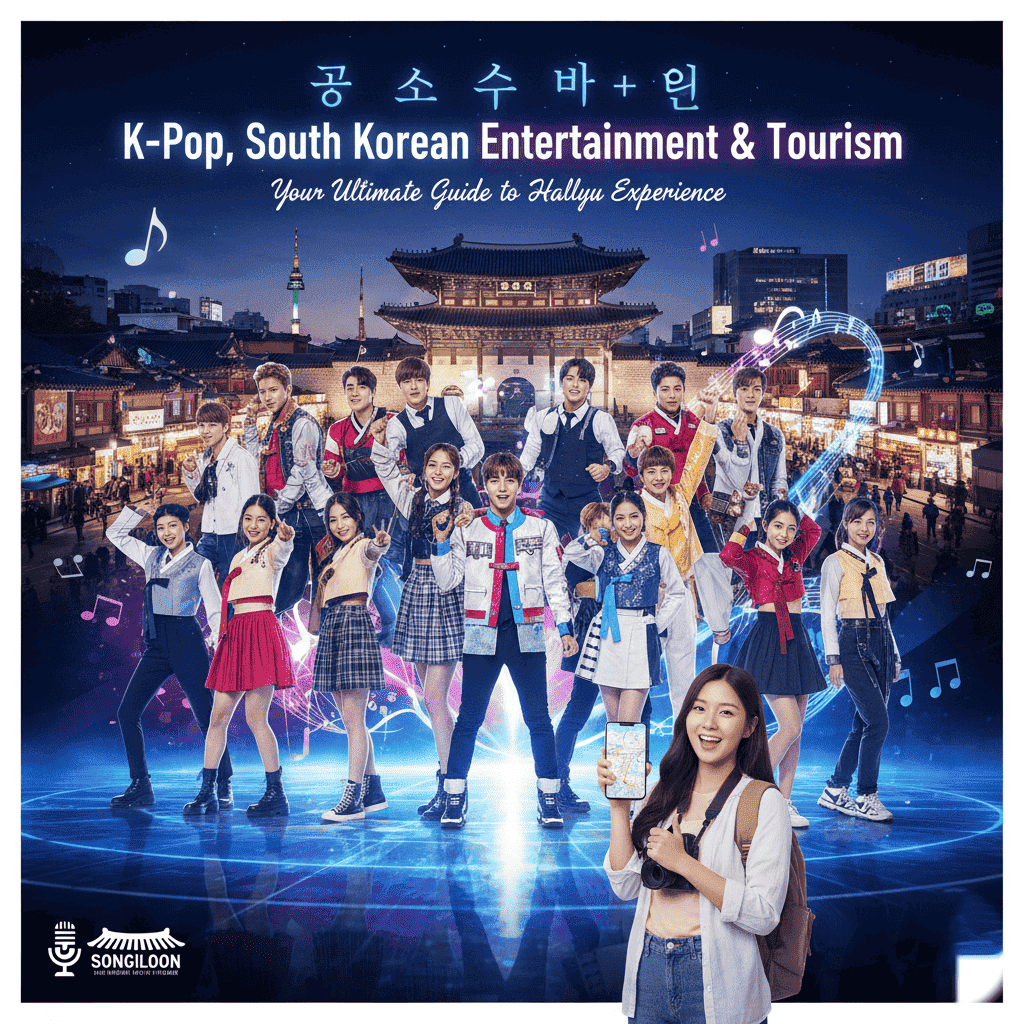
K-Pop, South Korean Entertainment & Tourism
South Korean entertainment has evolved over the last 20 years from a local cultural export to a significant worldwide phenomenon. Millions of people around the world have been captivated by South Korea’s emotionally compelling Korean dramas and chart-topping K-Pop music. What began as a specialized interest in Asia has grown to become a powerful force in pop culture worldwide, impacting travel, fashion, language, and even international business.
This blog by Fly For Holidays examines how K-Pop and South Korean entertainment swept the globe, what made them so successful, and why the Korean Wave (Hallyu) keeps getting bigger every year.
The Rise of the Korean Wave (Hallyu)
Hallyu, a term which is known as “Korean Wave,” describes the widespread appeal of South Korean Culture.
Korean TV dramas first gained popularity in China and Southeast Asia in the late 1990s and early 2000s. K-Pop, Korean movies, and K-beauty joined the trend by the mid-2000s, resulting in a multi-industry cultural movement.
South Korea Tour Packages offers travelers to experience this Hallyu environment. With billions of dollars in economic contributions from entertainment, tourism, fashion, and exports, Hallyu is now a major force behind South Korea’s soft power.
Read Also: “How to Plan a Trip to South Korea: The Ultimate Travel Guide”
Let Our South Korea Tour Package Expert Call You
Evolution of K-Pop: From Local Music to Global Charts
Early Beginnings of K-Pop
Early in the 1990s, bands like Seo Taiji and Boys combined Western pop, hip-hop, and Korean lyrics to create modern K-Pop music. The idol-based music industry of today was made possible by this inventive sound.
A structured trainee system was developed by entertainment companies like SM Entertainment, YG Entertainment, and JYP Entertainment, which produced highly skilled performers trained in stage presence, dancing, and singing.
Global Breakthrough of K-Pop
The 2010s saw a worldwide breakthrough with organizations like:
- BTS
- BLACKPINK
- EXO
- TWICE
- Stray Kids
While BLACKPINK dominated YouTube views and international music festivals, BTS became the first K-Pop group to reach the top of the Billboard Hot 100.
Key factors behind K-Pop’s success:
- High-quality, catchy music
- Beautifully designed music videos
- Strong choreography
- High levels of fan interaction on social media
Read Also: “Top 15 Places to Visit in South Korea for Every Traveler”
The Role of Social Media and YouTube
Digital accessibility was a major factor in K-Pop’s globalization. Fans all over the world were able to discover Korean music without any language barriers thanks to platforms like YouTube, Instagram, TikTok, and Twitter.
K-Pop agencies mastered online marketing by:
- Releasing music videos with captions
- Promoting fan engagement
- Using viral challenges and hashtags
- Online concert streaming
K-Pop became one of the most streamed music genres worldwide when YouTube emerged as the primary entry point for fans from other countries.
Read Also: “Cherry Blossom Season in South Korea: Top Places & Best Time to Visit”
Korean Dramas: Storytelling That Crosses Borders
- Why Korean Dramas Are So Popular
Strong storytelling, emotional nuance, and excellent production value are hallmarks of Korean dramas, or K-Dramas. The majority of K-Dramas are easy to follow because they have a distinct beginning and conclusion, unlike long-running TV series.
Popular genres include:
- Romance
- Historical (Sageuk)
- Thriller and crime
- Fantasy and sci-fi
- Slice of life
Global K-Drama Hits
Among the Korean dramas that have achieved international success are:
- Crash Landing on You
- Descendants of the Sun
- Goblin
- Squid Game
- Vincenzo
- Itaewon Class
By making significant investments in South Korean content and dubbing series in several languages, Netflix significantly contributed to the global accessibility of K-Dramas.
Let Our South Korea Tour Package Expert Call You
Squid Game and the Global Streaming Boom
When Squid Game premiered, it changed the face of South Korean Entertainment, becoming Netflix’s most-watched show around the globe! This showed the world that there were opportunities for non-English language shows, to lead in viewership on an international level.
This success encouraged global OTT platforms to:
- Invest in Korean Content
- Supporting Global Storytelling
- Acknowledging South Korea as a Creative Force
Read Also: “South Korea Nightlife & Cafés – Seoul After Dark & Trendy Coffee Culture”
K-Pop Fandom Culture: The Power of Fans
K-Pop Fanbases are some of the most structured and powerful fan groups in the World. Fans from groups such as ARMY (BTS Supporters) and BLINKS (Supporters of BLACKPINK) will actively support their Artists through the following methods:
- Streaming Campaigns
- Album purchases
- Social media trends
- Charity Events
These devoted followers have assisted K-Pop performers in becoming worldwide leaders in Chart Rankings and Award Shows.
Read Also: “South Korea Trip Cost from India”
Fashion, Beauty, and Lifestyle Influence
Korean pop culture and entertainment have had a major impact on the global fashion and beauty industries, via K-Pop and K-Drama actors/actresses serving as brand ambassadors for high-end designer brands, including:
- Gucci
- Dior
- Chanel
- Louis Vuitton
Also, many K-beauty products, such as BB creams, sheet masks, and glass skin routines, have received significant popularity and recognition throughout the world.
In fact, many K-Pop and K-Drama fans are not only listening to K-Pop songs or watching K-Dramas, they’re also culturally adopting a lot of elements of Korean culture.
Read Also: “Best Time to Visit South Korea”
Economic Impact of South Korean Entertainment
K-Pop and K-Droms are thriving. This means:
- Increased tourism to South Korea
- Increased Korean language learning
- Increased international trade and exports from South Korea.
Fans are traveling to South Korea to see filming locations, attend concerts and enjoy the South Korea Cuisine and cultural experiences of the Korean people.
As such, the entertainment industry in South Korea is becoming an increasingly significant contributor to the GDP (i.e. economic output) of South Korea and creating a positive global image for South Korea.
Read Also: “Applying Visa for South Korea from India in 2025”
Government Support and Cultural Strategy
The South Korean government has taken many steps to promote its arts & culture industry through:
- Cultural funding
- Export incentives
- Global promotions
- International cultural festivals
This has allowed South Korea to create a strong International cultural export business in entertainment.
Language Is No Longer a Barrier
The most intriguing characteristic of K-Pop and K-Dramas lies in the fact that language ceases to be a barrier. Fans cheerfully sing Korean lyrics and watch subtitled shows-Love knows no languages.
This change has eased access to the international acceptance of content made in another language.
Future of K-Pop & South Korean Entertainment
The future of South Korean entertainment is very bright.
- AI-driven content
- Virtual K-Pop idols
- Global collaborations
- International tours
The K-Pop and K-drama will remain in the driver’s seat of global entertainment for many years to come.
Tip: Keep your South Korea Visa ready, to enjoy K-Pop live concerts or explore iconic films & drama shooting locations.
Conclusion
K-Pop and South Korean entertainment took over the world through creativity, rich storytelling with emotional traction, strategic digital marketing, and interaction with fans. From catchy tunes and dazzling choreography to unforgettable dramas and cultural meanings, South Korea has shaped entertainment, globally.
While the Korean wave is forever expanding, K-Pop and K-Dramas seem to grow big, and one thing is certain: they are not merely a trend; they are a global movement with a future.
K-Pop, South Korean Entertainment & Tourism Faq's
It has gained worldwide awareness while also building up a strong affinity and long-term interest in South Korea as a cultural tourism destination.
As a result of this international success, the country has experienced a surge in tourism and cultural interest as well as an increase in international recognition of South Korea.
Tourists travel to see performances and visit the companies associated with these performances, purchase merchandise that is officially recognised, and experience Korean culture for themselves.
Key areas for Tourism development within South Korea can be highlighted through popular K-Drama locations, including Nami Island, Itaewon, Gyeongbokgung Palace and Jeju Island.
There has been a massive increase in how people consider South Korea as a possible travel destination. The number of travellers who identified themselves as either BTS fans or Heirs fans who travelled to Korea was over 700,000 in 2017 (just over 7% of total inbound travelers).
Hallyu tourism is a type of tourism that is influenced by Korean pop culture. Korea’s pop culture includes K-Pop (Korean popular music), K-Dramas (Korean television dramas), Korean movies and celebrities.
Every year many thousands of international travelers attend large-scale K-Pop concerts/festivals.
K-Pop tourism is predominantly for people of Gen Z and Millennials (Generation Y) from around the world.
Hollywood dramas produced by Netflix such as Squid Game and Crash Landing on You have piqued the curiosity of many people around the world and created an increase in travel interest to South Korea.
The South Korean government is also supporting Hallyu tourism by creating a strong marketing campaign globally via marketing agencies and cultural festivals.

Comment (0)