

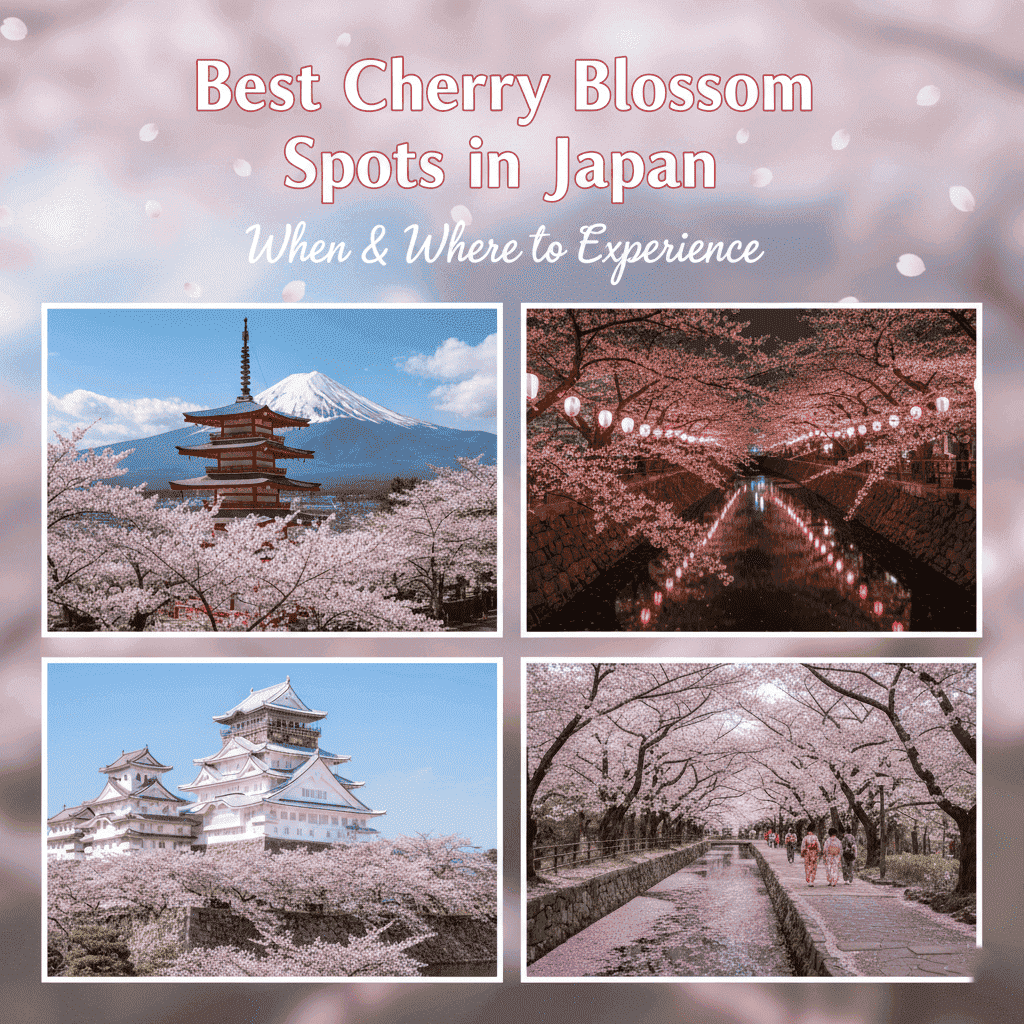
Best Cherry Blossom Spots in Japan: When & Where to Experience
In Japan, springtime means sakura season. Sakura, or cherry blossom season, is a once-yearly spectacle that transforms parks, castles, and riverbanks into picture-perfect postcard scenes, from delicate pale-pink canopies over temple paths to rivers lined with blushing tunnels of blooms. A Japan Tour Packages offers travelers to explore top Japan’s cherry blossom locations in affordable price, which are listed in this guide, along with information on when and where to expect peak bloom by region, useful hanami tips, and sample itineraries to help you plan a trip that coincides with the sakura front.
Quick Guide: What is “Sakura Season” and How it Moves Across Japan
Sakura season is a migrating front rather than a single, set date. As early as January, blossoms start in the south (Okinawa), move through Kyushu/Shikoku and Honshu in March and April, and arrive in Hokkaido in late April or early May. Major cities like Tokyo, Kyoto, and Osaka typically experience peak bloom (mankai) in late March or early April, but regional variations are common; always check the seasonal forecast before making a reservation. Numerous travel agencies, such as Fly For Holidays, create appropriate itineraries and advise travelers to plan to enjoy their Sakura season vacation.
Read Also: “How to Plan a Trip to Japan: The Ultimate Travel Guide”
Let Our Japan Tour Package Expert Call You
Top Places for Cherry Blossom Sightseeing:
International Tour Packages offers travelers to experience the magic of sakura season worldwide. Many countries turn into pink wonderland in this season, but every Japanese city offers a unique cherry blossom charm. These curated Japan city tours combine culture, festivals, and picture-perfect sakura views, ensuring you don’t miss a single highlight of Japan’s most beautiful season.
Tokyo — urban Sakura:
Tokyo’s riverbanks and parks are famous for hanami:
- Ueno Park: With more than 1,000 trees and a festival vibe, it’s ideal for exciting hanami picnics.
- Meguro River/Nakameguro: A chic, romantic riverbank stroll with trees illuminated at night (yozakura).
- Shinjuku Gyoen: The viewing window is extended by a variety of cherry varieties, and the area is spacious and less crowded.
Time: Late March — early April (year-to-year variation).
Kyoto — classic temple-and-torii sakura:
With its willow-lined canals, temple courtyards, and old streets surrounded by cherry trees, Kyoto is the cultural center of sakura imagery. Must-sees:
- Philosopher’s Path: A leisurely walk beside temples by the water.
- Maruyama Park /Yasaka Shrine: picnic groups and nighttime lights beneath the large shidare-zakura (weeping cherry).
- Kiyomizu-dera and Arashiyama (Togetsukyo Bridge): Temple views with river and mountain backdrops.
Time: Late March to early April (often within a day or two of Tokyo’s peak).
Osaka — castle parks, rivers & festivals:
Osaka combines traditional hanami with urban energy:
- Osaka Castle Park: The moat is surrounded by hundreds of cherry trees that provide striking views of the castle tower.
- Kema Sakuranomiya: Known for its evening lights, this riverside walkway features endless rows of trees.
Time: Late March to early April (great base for combining cherry-viewing with nightlife and food tours).
Hirosaki (Aomori):
One of the top three places in Japan to see cherry blossoms is Hirosaki Castle Park. It’s spectacular with tens of thousands of flowers surrounding the castle and moat. Hirosaki is a great choice if you want dramatic petals floating over castle moats and fewer foreign visitors.
Time: Mid to late April (timing is later than Honshu).
Mount Yoshino (Nara):
Tens of thousands of cherry trees have been planted on the slopes and tiers of Mount Yoshino, which has been a revered sakura pilgrimage site for centuries. The sight of layered blossoms climbing the mountain is unforgettable. In high season, make early reservations and prepare for steep walking.
Time: Early to mid-April
Hokkaido:
The cold climate of Hokkaido causes bloom to occur later. Top locations:
- Goryokaku Fort (Hakodate): Stunning aerial and moat views of this star-shaped fort surrounded by cherry trees.
- Matsumae Park: Located in southern Hokkaido and features gardens and castle ruins encircled by cherry trees.
- Moerenuma Park and Maruyama Park (Sapporo): Large open areas and well-maintained lanes for hanami.
Time: late April or early May
Nagano & Iwate:
- Takato Castle Ruins: Known by Japanese photographers for its vibrant pink blooms.
- Kitakami Tenshochi: One of Tohoku’s greatest spring festivals is frequently associated, a kilometers-long riverbank tunnel covered in cherry trees.
Time: Mid to late April (fewer tourists and sweeping countryside views)
Let Our Japan Tour Package Expert Call You
Lesser-known but magical:
These locations offer a variety of experiences, such as historic streetscapes, ancient specimens, or an early season head start.
Miharu Takizakura: A 1,000-year-old giant tree in Fukushima, is a sight to behold.
Kakunodate (Akita): The Samurai district, which is lined with rows of weeping cherries, is an excellent place to combine sakura and culture.
Kawazu (Izu Peninsula): If you want to see cherries before the main rush, this is perfect for the early-blooming Kawazu-zakura.
Time: February and March
Read Also: “Top 10 Must-Visit Places in Japan for Every Type of Traveler”
7-day cherry blossom itinerary (classic Tokyo–Kyoto route)
- Day 1 – Tokyo: Arrive in Tokyo, evening walk along Meguro River or Nakameguro River.
- Day 2 – Tokyo: Morning in Ueno Park, afternoon in Shinjuku Gyoen, Shibuya & Nakameg
- Day 3: Tokyo → Hakone or Mt. Fuji region: Hanami by the lake, or enjoying an onsen in early spring.
- Day 4 — Kyoto (arrive): Explore Gion & Kiyomizu-dera in
- Day 5 − Kyoto: Philosopher’s Path & Maruyama Park (Sakura at Night)
- Day 6 – Nara side trip/Mt. Yoshino: Deer Park, Mt. Yoshino slopes (depending on season).
- Day 7 – Osaka: Osaka Castle Park, River Walk, Depart.
Tip: Alternatively, if your dates are earlier (February through early March), you can try Kawazu (Izu) or Southern Kyushu, and later (mid to late April) go north to Tohoku or Hokkaid
Planning tips & hanami etiquette
Book in advance: Spring is a major travel peak. Flights and hotels in Tokyo and/or Kyoto need to be booked well in advance. (Need assistance? I can help you construct some examples of promos and/or ad copy if you inform me of your travel dates.)
Check multiple forecasts: Use the national sakura forecast and updates available in your local area (city, jma, Japan-guide) because flowers bloom very sensitively to warm and cold temperatures
Arrive early / go late: Popular places can get very busy, but early in the day is less crowded. Light-ups in the evening are a lovely time for yozakura viewing
“Hanami” etiquette: spread tarps, keep places clean, do not mark permanent territories, drink in moderation, and follow local regulations (alcohol consumption may be forbidden in some public gardens).
Pack layers: Spring can be quite cool in the early morning/evening. Good walking shoes are a must for visiting temples and mountains. Photographing: For crowdless shots, try taking them during sunrise hours or on a weekday morning. The castle, river, or temple can serve as a foreground.
Japan Visa Tip: Sakura season is peak travel time; hence, apply for a Japan Visa at least 4–6 weeks in advance with a valid passport, confirmed itinerary, and hotel bookings in advance to avoid delays.
Read Also: “How To Track Your Japan Visa from India in (2025)?”
Festivals & illuminations (what to expect)
Many cities hold festivals with sakura food stalls a vital part of Japanese Cuisine, local crafts, and nighttime light-ups. Classic examples include festivals in Ueno Park and seasonal river marketplaces. Night time illuminations send cherry tunnels into fairy tale-like locations, especially in the evenings, perfect for evening hanami walks. However, also remember that crowds spike on festival nights.
Final notes — timing is everything, but variety is your secret weapon
Sakura season is famously short-lived-a bashful, skittery window-but Japan gives variety: from early Kawazu blossoms to late Hokkaido displays. If your travel window is flexible, plan a northward or southward route to match the sakura front and maximize your chance of hitting mankai-full bloom. For classic postcard scenes visit Kyoto’s temples and the castle parks of Osaka and Hirosaki; for intimate, stylish hanami strolls choose Nakameguro and the Philosopher’s Path. And always check the updated cherry blossom forecasts in the weeks before you travel.
Best Cherry Blossom Spots in Japan: When & Where to Experience Faq's
Late March to early April is usually the best time to see cherry blossoms in Japan, particularly around cities like Tokyo, Kyoto, and Osaka; however, this depends on the region and weather.
Top cities include Tokyo, Kyoto, Osaka, Nara, Hiroshima, Hakodate of Hokkaido Prefecture, and Fukuoka, each with iconic sakura parks, riversides, and historic landmarks.
Sakura flowers normally last for full bloom in 7–10 days, while the season of sakura generally spans from January to May, moving from south to north throughout Japan.
Yes, this is the peak tourist season in Japan. The early booking of tour packages supports getting better hotels and guided experiences.
It is recommended to book 3–6 months in advance during the cherry blossom season due to the high demand.
In fact, most travelers do require a Japan tourist visa, for which the application should be sent 4–6 weeks ahead of time, particularly during peak season.
Hanami is the Japanese tradition of viewing cherry blossoms, often by picnicking under blooming trees, and sometimes Party: enjoying with a picnic in parks and gardens.
Japan is already a pricey destination, but during cherry blossom season, it gets even expensive. Hotel rates can surge by 50% to 100%, particularly in popular cities like Tokyo and Kyoto.
Indeed, the weather in spring is nice, and cherry blossom parks, festivals, and city tours are great for families.
A lot of cities such as Tokyo, Kyoto, and Osaka have yozakura (night cherry blossom) light-ups in the season.


Comment (0)